

Many people avoid Medical Doctors, dentists and virtually any agent calling themselves practitioners. This even goes for teachers, lawyers, couselors, but especially for dentists and medical doctors. Why is this? It's mostly because they associate virtually all practitioners with mental and physical pain.
Think about it: do you really want to go to a dentist? Why did you end-up in the dentist office? Most tend to end-up at the dentist for regular check-ups and there it's pretty common they find a cavity, gum problems, and often times the eventual cavity filling, tooth extraction, root canal. Sounds painful, right? It sure does and many avoid them and others for that reason.
The main reason we visit these practitioners is because the entire system along with frequently our lives, are structured into an industrial maze. We often try to maintain frequent daily routines and these often compose of toxic work environments, toxic food and drink, and toxic relationships of all sorts. Indeed, it certainly resembles a factory assemby line from birth to death. Medical doctor's office visits are no different.
Table Of Contents
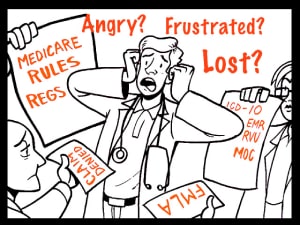
Many have become distrustful of Medical doctors especially those who have developed health problems or maintain friendships and have family who went through the entire process and rarely obtain solid resolutions for seemingly minor issues. Why is this? It's due to the fact that virtually all practitioners operate under a bureacracy much like your daily workplace. If we realized this we would develop more understanding and compassion for these poor souls that have to often deal with abusive people who are frustrated and sick.
Many people are aware there are much better ways to solve health issues but aren't entirely sure about what to choose and I was in the same boat mostly my entire life. For example there is an almost cult-like following of various "alternative health" practitioners such as chiropractors, massage therapists, nudist colonies and others that are very crude ways of trying to obtain the dream of "feeling better." The fact is these singular modalities will help but they aren't addressing the root cause of illness directly, nor are they precise enough to do so.
The typical office visit to a Medical doctor usually comprises of attending their office when you become "sick" and/or when you are there for a yearly physical examination. Most people who develop any kind of illness usually do not attend their office unless it is a severe issue and this is the acute mindset For example, when someone because suicidally depressed they attend the MD office where the Doctor runs very limited tests and mainly only bloodwork based on reductionist science that separates body processes down to mainly the symptoms without diving much deeper to find root causes.
One of the large factors is their medical bodies push them to run limited tests to save funds for the medical system. 60 years ago or more Doctors were known to test many substances such as far more vitamins, minerals, hormones and many others. Over the past 30 years or so, and at least in Canada, many services and tests have been what is called "delisted." Vitamin D used to be one of them that was covered, but has also been delisted in many jurisdictions. Overall it's not what is called a "holistic" process they operate under and leads many to become disatisfied with their practitioner and becomes known as a "pill pusher." The sad fact is that many Medical doctors actually believe prescriptions are the only answer for chronic issues mainly because of the intense, excessive and biased conditioning they receive in the medical training they undergo.
The more simple sitations such as common cold, influenza, burns, scrapes, broken bones are usually the scenarios where the remedies are more straightforward then metabolic, often chronic symptoms such as cancer, diabetes, other label diseases. In the former it's usually a guessing game with the prescription of medications, surgeries and it's very common to prescribe more medications to counter-act the original side-effects and usually the points where most people seek treatments from other providers usually called "alternative medicine."
A recent article in BusinessWeek reports that David Eddy, MD, PhD, a former heart surgeon turned mathematician and health care economist, has been advocating for the idea that practicing medicine is more guesswork than actual science. Dr. Eddy believes that there is little known about which common treatments actually work, and this speculation has gained momentum over the past few years. While this stance may be controversial and potentially offensive to some doctors, Dr. Eddy emphasizes that physicians themselves are not to be blamed, but rather the lack of clear evidence surrounding the practice of medicine today.
Bloodwork is a problem because it's only a snapshot in time of what's transpiring inside your body but the blood carries very limited amount of information about what's happening to your cells' nutrition status and function -- hence a big part of the "guessing game." There are many other tissues they could test especially for prevention measures such as hair mineral analysis (which many veterinarians use) and many others. Since your body cells rely primarily on cellular nutrition does it not make sense to test these bio-markers? It's a well-known fact that many medical doctors receive little to no cellular nutritional training in medical school and in fact, most only obtain instruction from 4 to 8 hours over their years of schooling. If they did receive more cellular nutritional training their orientation would be more akin to a botanist rather than a automobile mechanic. Saying this is not to desperage automobile mechanics, but the analogy is appropriate because mechanics are also mostly acute-focused and not many people attend mechanic garages to prevent problems mostly because of the cost, but also because automobiles are not living organisms with trillions of cells.
This is the confusing propaganda that misleads us all

There's no such thing as a "balanced diet" & nutrition isn't merely food. Why is that? It's because we're all individuals. Orthomolecular nutrition is the individualized analysis application of the substances within the food which our bodies often do not obtain enough of and are often blocked by antagonists.
"Nutrition" is far more than merely the trivial concept of food.
Botanists analyze the terrain to help plants prevent and restore cell function. Why not for humans?
What are YOUR individual cell nutritional imbalances?
The typical frustrating MD office appointment is where they prescribe medication, surgeries and maybe very bening life-style changes and out the door the patient goes.
From there if they do not find anything in what they consider "abnormal" (based on very very limited criteria to compare to) they send you off as a referal to specialist and it becomes a literal human reparation assembly line. The fact is it's frequent that what the MD considers normal according to tissue samples is not usually "normal" because the definition of normal changes all the time and varies between sample sizes. Other countries maintain higher tissue testing and interpretation standards as well and is one of the big reasons many. people seek medical assistance by traveling to other countries.
In reductionism, the usual approach is to address multiple problems in a system one by one. Each problem is divided and dealt with separately. For instance, in the case of coronary artery disease, each known risk factor like hyperlipidemia or hypertension is individually addressed. This strategy is also applied to coexisting diseases like hypothyroidism, diabetes, and coronary artery disease. Each disease is treated independently, assuming that the treatment of one disorder, such as coronary artery disease, has minimal impact on the treatment of another disorder, such as hypothyroidism. Although this approach is easily implemented in clinical practice, it overlooks the intricate interplay between disease and treatment. The assumption is that the effects of treatments are cumulative rather than nonlinear.
Canadians less satisfied in their access to health care than Americans: surpised to Americans
it's surprising because the media, over the decades, perpetuated a myth that "Canada's healthcare is free" but many do not come to the realization that usually if it's "free" it's of poor quality and this is certainly the case in Canada, but it's also certainly not free of charge. If you don't work for free, then why should Doctors? They do not work for free, but their budgets have been slashed by governments trying to stabilize a socialist health care system that should be more accurately be coined "sick care" for the above reasons. Socialism works when the rate-payer fund in-flow is more or less balanced with capital expenditures but this has not been the case in Canada for about 40 to 50 years.
It doesn't help there are millions of people being permitted into Canada for another falsely-advertised idea: a corporate media class advertising labor shortages when most do not exist. Instead, we have corporations lobbying govern-ment to increase their labor pool to keep wages low, but at the expense of public infrastructure such as the sick care system Canada has nearly always been trying to maintain on shoe-string budgets. In response, Canada created a de-factor monopoly on health services back in 1983 in attempts to artificially contain out-of-control spending which effectively squashed competition and limited the amount of advertising to let people know of real systems biology solutions.
According to a recent poll, Canadians express lower levels of satisfaction regarding their access to healthcare compared to Americans. The findings reveal that only 15% of Canadians are content with their access to care, whereas 29% of Americans report satisfaction with their healthcare access.
Based on the findings of the Angus Reid Institute, it has been revealed that 29 percent of adults in Canada have encountered persistent obstacles when trying to access healthcare services. This percentage translates to approximately nine million individuals facing "chronic difficulty" in receiving the necessary medical attention. Furthermore, an additional 31 percent, equivalent to 9.7 million Canadians, have reported facing certain challenges, despite the fact that nearly all of them (98 percent) have a family doctor. It is noteworthy that this situation is prevalent across various regions of Canada, encompassing both urban and rural areas.
This is nothing new and has been a concern in Canada and around the world for decades with more patients resorting to previously unheard of therapies and treatments that used to be the "conventional."
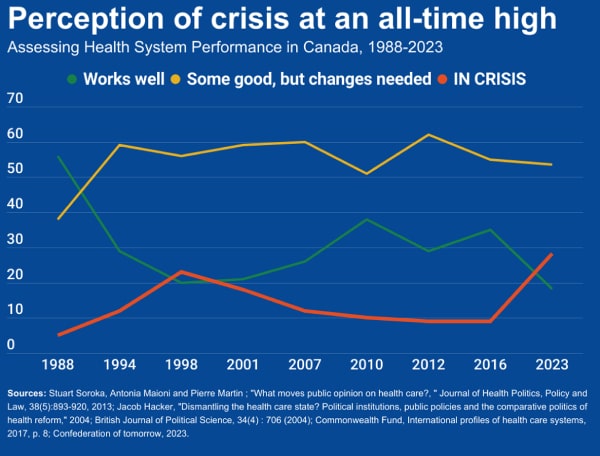
In terms of medical care accessibility, the most challenging areas for people were specialist appointments (58% overall), emergency care (54%), surgical procedures (51%), non-emergency treatment (44%), and diagnostic tests (41%). When looking at specific regions, British Columbia, Saskatchewan, Ontario, and the four Atlantic provinces collectively had over 60% of respondents expressing difficulties in accessing the necessary care. The Angus Reid Institute highlighted British Columbia and the Atlantic provinces as the two regions in Canada where more than one-third of individuals consistently faced challenges in accessing healthcare.
According to Shachi Kurl, the president of the Angus Reid Institute, Canadians have grown accustomed to the belief that they will never be denied access. However, she points out that due to shortages and malfunctioning of the system, individuals are indeed being turned away or left in limbo indefinitely.
Even in the absence of personal challenges with the health-care system, individuals may be acquainted with others who have faced difficulties. A majority of participants in the survey revealed that they had family members or friends who experienced significant (18 percent) or minor (33 percent) repercussions due to insufficient access to proper care.
It has been suggested that Canada has a superior healthcare system compared to the United States, but this notion is challenged when speaking to Americans directly. U.S. citizens hold a significantly more positive view of their own healthcare system, with nearly double the percentage of Americans surveyed (29 percent) expressing satisfaction with their access to healthcare. Additionally, a smaller proportion of U.S. respondents (13 percent) reported experiencing chronic difficulties in seeking medical care. When faced with the potential need for emergency care, 70 percent of Americans expressed confidence in receiving timely treatment, whereas only 37 percent of Canadians shared the same sentiment.
A better way: systems biology practitioners
There certainly is a better way to address the prevention of illness of any kind but also to treat health problems: systems biology which views the human condition in a more holistic way rather than treating acute issues as they pop-up. It's not a singular method of addresing health problems by prescribing medications that usually only make other parts of the human system worse over time, and this is very true for prescriptions and treatments as well as surgeries.
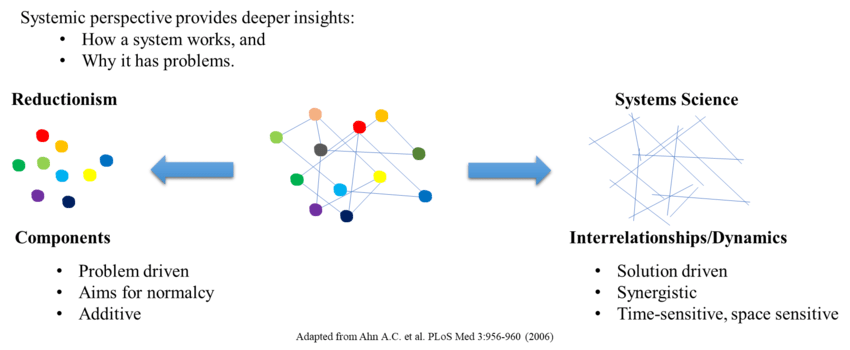
Since the time of Descartes and the Renaissance, science, including medicine, has followed a distinct path in its analytical evaluation of the natural world. This approach is commonly referred to as "divide and conquer," and it assumes that complex problems can be solved by breaking them down into smaller, simpler, and more manageable units. This approach, known as reductionism, has been the dominant paradigm in science for the past two centuries. Reductionism has had a significant impact on the medical sciences, influencing the way we diagnose, treat, and prevent diseases. While reductionism has led to many successes in modern medicine, it has its limitations, and we must seek alternative explanations to complement it.
The systems perspective has gained significant attention as an alternative explanation, thanks to the advancements in systems biology. Instead of breaking down a complex problem into its individual components, the systems perspective recognizes the interconnected and comprehensive nature of the problem. It employs computational and mathematical tools to evaluate the problem. This perspective is based on the belief that studying the trees individually cannot fully explain the complexity of the forest.
To gain a comprehensive understanding of a systems perspective, it is crucial to acknowledge the reductionist approach of medical science and its inherent limitations. Although clinical medicine is approached in a systematic manner, the science behind it is essentially reductionist. This is evident in four key practices: (1) prioritizing a single, dominant factor, (2) placing emphasis on maintaining homeostasis, (3) imprecise risk modification, and (4) utilizing additive treatments.
References: