
Witness the ongoing battle on the Western front. A relentless struggle waged by Western revolutionaries, determined to dismantle our cherished civilization and erase our rich history. But fear not, for this is a war we shall triumphantly conquer. Join Steven Edginton in an engaging conversation with Douglas Murray as they delve into his enlightening book, "The War on The West," on the captivating Off Script podcast. Immerse yourself in the full episode above or simply search "Off Script" on your preferred podcast app to listen in. Together, let us emerge victorious in this crucial fight for our values and heritage.
One thing they fail to mention in this video conversation is that the typical Marxist view of the world, especially humans, is viewing everything as mindless commodities that can be moved around a chess board much like an ant farm with a queen instructing the worker ants.
They also fail to realize that the typical person who calls themselves "progressives" yet still subscribe and label their fellow human according to extremely obsolete 600 year old animal classifications such as "red, yellow, black, white" are essentially contradicting themselves.
Table Of Contents
- 14 Reasons Why Your Supplements And Regime Aren't Working For You
- No "one size fits all" diet, lifestyle or work environment
- Why do we need supplements & higher quality food anyway?
- Why do many people stop taking beneficial supplements & food on a frequent basis?
- 1. Your expections do not meet reality & most important: not individualized!
- 2. Your life situation is not where you need it to be
- 3. You're not waiting long enough for effects
- 4. You're not appropriately managing stress
- 5. There may be hormone imbalances underlying your condition
- 6. Your gut health is likely compromised
- 7. The supplements & food you're buying are of poor quality
- 8. Ensure you acquire high-quality products & food
- 9. You're not taking appropriate dosages of food & supplements
- 10. Your cellular nutritional protocol is not individualized uniquely for you
- 11. Dosages in adequate amounts do not stay in your body long enough between dosage intakes
- 12. You're stuck in the "take this 1 substance for that ailment band-aid" approach your MD uses
- 13. Uncomfortable absorption effects
- 14. Your mineral systems is not balanced
Conversation Transcript:
As long as individuals possess accurate information and compelling arguments, I firmly believe that the cultural revolutionaries cannot emerge victorious. Personally, I refuse to spend the remainder of my life feeling ashamed and falsely accused of actions I never committed. I am determined to stand my ground. Welcome to Offscript, where I, Stephen Edgington, will guide you through an exploration of the ongoing culture wars. These wars can be seen as an assault on Western civilization. Today, we have the privilege of discussing a new book titled "The War on the West" with the esteemed author, Douglas Murray. Thank you for joining us, Douglas. Could you please shed some light on what exactly the war on the West entails? It is an honor to have you here with us today. "The War on the West" is the culmination of my recent literary endeavors. It delves into what I perceive as a significant narrative unfolding in our time - a war on the West, initiated and perpetuated by the West itself. While various forms of anti-Western sentiment exist globally, such as Chinese, Arab, and Russian anti-Westernism, my focus lies on Western anti-Westernism. This pertains to movements within the Western world, particularly English-speaking democracies and Europe, that seek to dismantle our cultural heritage, history, and more. These movements aim to strip us of our inheritance, viewing everything through a narrow lens of racism.
There is no denying that oppression, slavery, and colonialism have had a profound impact on the world, particularly in the West. However, it is important to recognize that these dark chapters of history do not define us entirely. While it is true that there are movements within the West that criticize and challenge its own history, it is crucial to understand that this is not a phenomenon exclusive to the West.
Throughout the world, there are various movements that seek to address historical injustices and reclaim cultural identities. However, it is incorrect to assume that these movements are absent in other regions. Africa, for example, has seen movements that aim to preserve and celebrate its rich history. Similarly, countries in the Far East, such as China, have made significant contributions to the world and take pride in their cultural heritage.
It is essential to differentiate between self-reflection and self-hatred. While some individuals may criticize their own traditions, it does not necessarily mean they despise themselves. Rather, they are questioning and challenging the actions and ideologies of the past. This process of introspection is not unique to the West but can be observed in various revolutionary movements throughout history.
In order to move forward and address the issues of the past, it is crucial to acknowledge and understand the complexities of history. By engaging in constructive dialogue and promoting inclusivity, we can work towards a more equitable and just society. It is not about erasing or denying our history, but rather learning from it and striving for a better future.
It is not uncommon for civilizations to experience significant changes and revolutions towards the end. This phenomenon can be observed in various historical events, such as the Cultural Revolution in China and Cambodia. These revolutions often aim to start anew, erasing the past and beginning from scratch. However, what sets the current situation apart is the scale and impact of the revolutionary movements. Unlike previous instances, where small groups took over societies, the current movement has permeated our institutions and public consciousness. In countries like Britain, anti-western sentiments have tainted our public institutions, leading to a disregard for our own history and achievements. This movement has gained momentum rapidly, but it has not yet managed to overthrow our democratic system or cause mass violence. It is a complex and elusive phenomenon, which is why your book is so relevant. However, I believe that the origins of this movement can be easily traced back to the post-colonial period, where some individuals began advocating for revenge against Western nations.
There is a growing trend in recent years where certain individuals openly advocate for a revolution and seek revenge on the West for its history of colonialism. They argue that America, in particular, has not adequately addressed the issue of slavery and believe that it is now necessary to carry out a historical act of vengeance. It is important to note that slavery was abolished 200 years ago, yet these movements insist on holding present-day America accountable for something that occurred in the distant past. This mindset is most evident in the so-called anti-racist movements, led by figures like Abraham X Kendi and Robert D'Angelo, who assert that past oppression of non-white minorities justifies present-day racism against those perceived as the perpetrators. While it is undeniable that racism has existed throughout history and across cultures, it is disheartening to see these individuals advocate for present-day racism as a means of rectifying past wrongs.
This is the confusing propaganda that misleads us all

There's no such thing as a "balanced diet" & nutrition isn't merely food. Why is that? It's because we're all individuals. Orthomolecular nutrition is the individualized analysis application of the substances within the food which our bodies often do not obtain enough of and are often blocked by antagonists.
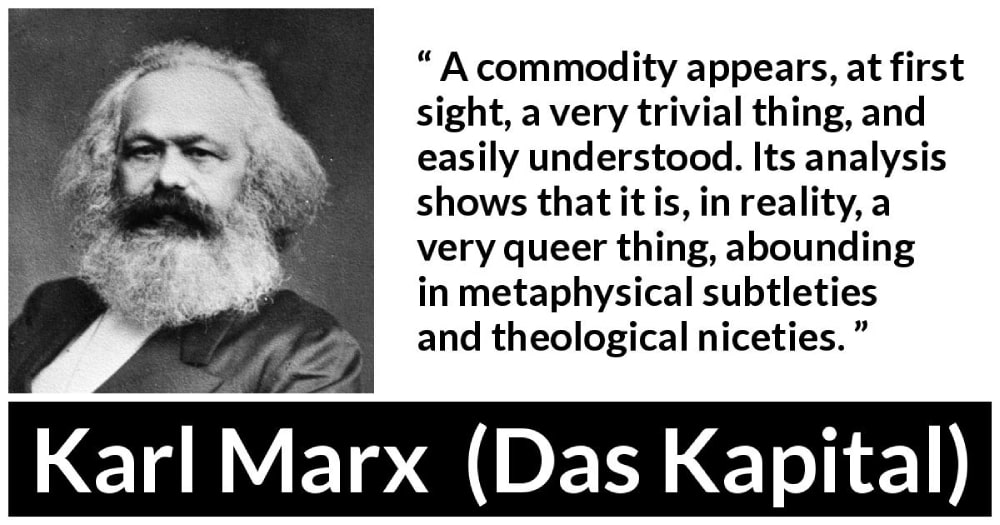
"Nutrition" is far more than merely the trivial concept of food.
Botanists analyze the terrain to help plants prevent and restore cell function. Why not for humans?
What are YOUR individual cell nutritional imbalances?
Max Kennedy argues that in order to address past injustices and oppression, we must perpetuate present-day injustice and prejudice. He suggests that because black people were historically discriminated against, we should now discriminate against white people to balance the scales. However, seeking revenge and engaging in anti-westernism only perpetuates division and hatred. It is absurd to wage a war on any racial group based on their identities. We should condemn such abhorrent behavior in any other situation, yet it seems acceptable to target white people currently. For example, if we were two black British commentators discussing a topic, it would be considered racist if someone dismissed our opinions by saying, "That's just two black guys, what right do they have to talk?" However, if the same comment was made about two white individuals, it is seen as acceptable. This double standard is prevalent today, where one form of racism is deemed permissible. It is crucial to recognize that any form of racism is wrong and should be condemned.
It is crucial to address the issue of racism in a fair and just manner. Seeking vengeance on any racial group, including white people, is not the solution. While it is important to acknowledge the wrongdoings of the past, it is equally important to recognize that individuals should not be held responsible for the actions of their ancestors. Promoting unity and understanding among all races is the key to progress. It is essential to educate people about the experiences and perspectives of different racial groups, without resorting to fear or intimidation. By fostering empathy and respect, we can build a society that values diversity and rejects discrimination.
The current cultural revolution is undeniably successful in silencing dissent and instilling fear in people. It has created an environment where individuals are afraid to express their thoughts or acknowledge the reality unfolding before them, all because they fear the repercussions and labels they may receive. Consequently, they choose to remain silent and keep their heads down, except for the occasional opportunity to voice their opinions through voting every few years. This slippery situation is exacerbated by the left's gaslighting tactics, dismissing the existence of culture wars as a mere fabrication of the right. In your book, you highlight the destructive nature of this movement, with its attacks on statues, monuments, authors, and the cancel culture phenomenon. It is far easier to tear down than to build, and it takes years, even decades, to construct a civilization. Do these individuals have a utopian vision they strive for, akin to the communists of the 20th century, or is it simply a never-ending revolution, constantly attacking the past? What is their ultimate goal? I would like to address this point and emphasize that this claim, made by myself and other critics, is one of the most prominent and concerning aspects of the current situation.
They claim that Douglas Muddy is actively embracing her culture, but that couldn't be further from the truth. I have no interest in participating in any kind of culture war; I find the idea to be utterly ridiculous. However, if you insist on labeling everything in my past, my civilization, and my culture as terrible, including myself and my predecessors, and then dismiss my objections as engaging in a culture war, that is nothing short of gaslighting. It's as if the left initiates these destructive culture wars against everything, and when someone dares to challenge them, they accuse them of starting a right-wing culture war. But let me make it clear, it is not a culture war to recognize that there is a radical movement aiming to dismantle the entirety of Western history, claiming that there is nothing good about it, and vilifying white people. It is simply a matter of standing up and saying, "Count me out." This is a matter of basic moral integrity, intellectual honesty, and decency. We should not allow illiterate and ill-informed individuals who despise our society and civilization to recklessly tear down everything they know nothing about, and then cry foul when others refuse to go along with their destructive agenda. It is one of the most glaring falsehoods propagated by the radical left to assert that it is the right that instigates these culture wars. In reality, it is a creation of the left, and it is only right for people from all sides of the political spectrum to object to it and voice their dissent without being unfairly accused of seeking conflict.
Of course, when discussing the concept of utopia, it is important to acknowledge the movements that I critique - the anti-western movements in the war on the west. These movements, like many utopians, have a flawed understanding of what an ideal society should look like. While I don't believe in the possibility of a true utopia, I do believe that we can strive for a satisfactory state of affairs. In fact, I have previously argued that we were making progress towards this state in recent decades. During our previous conversation, which revolved around my book "The Madness of Crowds," we discussed how society had come to a consensus that individuals should not be held back from achieving their potential based on characteristics they have no control over. Whether it is gender, sexual orientation, or any other trait, it is absurd to impede someone's progress simply because of these factors. We, as a society, should focus on enabling people to pursue their goals and reach their full potential.
The power of one's accomplishments should never be determined solely by the color of their skin. It is widely accepted that those who hold a different view on this matter are in the minority, particularly on the far right. However, it is concerning to see that the far left is now adopting a similar approach, emphasizing racial characteristics as the defining factor in one's worth and ability to speak. While it is important to address past injustices, it is not justifiable to perpetuate present-day injustices in the name of equality. Granting opportunities solely based on race is not the solution we should strive for. The goal should be to create a society where we are truly colorblind, where one's race does not define their worth or limit their potential. Unfortunately, even the concept of colorblindness is now being labeled as racist. This is the battle that those who oppose such thinking are fighting against. The dream of Martin Luther King Jr. and others, to reach a society where individuals are judged by the content of their character rather than the color of their skin, has been turned upside down. Those who claim to be anti-racist are, in fact, engaging in their own form of racism by perpetuating divisions based on race. It is important to acknowledge their intentions, but it is clear that their approach lacks thorough consideration. The path they are advocating for does not lead to true equity.
We must recognize that progress and unity cannot be achieved by attacking the majority or eradicating the foundations that have brought us to where we are today. It is concerning to see that some self-proclaimed anti-racists label every desirable achievement as racist. They argue that concepts like punctuality, accuracy, and showing your workings in STEM subjects are inherently racist because they are associated with white culture. They even claim that standardized testing, which has been developed by white people, is racist. However, it is important to note that these ideas undermine the opportunities available for individuals of all racial backgrounds to succeed through hard work and accomplishment. The cultural revolution that is being advocated for in the name of an undefined utopia will only lead to more harm for everyone. Therefore, it is crucial to put an end to this movement now. While it may be tempting to use strong language to describe our opponents, it is important to approach this issue with fairness and understanding. Let us now address a question from the woke perspective.
In that case, allow me to present a different perspective. It is important to play devil's advocate occasionally, just to challenge our own beliefs and gain a deeper understanding of opposing viewpoints. The left often misunderstands the motivations of the right, accusing them of wanting to harm the poor, being racist, homophobic, or anti-immigrant. However, it is possible that we are attributing motivations to the left that they do not actually have. They claim to strive for equality, diversity, and justice, and perhaps that is truly their intention. These ideals can be benevolent in many ways. Instead of focusing on extreme examples, we should strive to interpret the motivations of the entire left accurately. I agree with you that it is essential to "steel man" our opponents rather than "straw man" them. Personally, I always choose the most mainstream examples to illustrate the cultural revolution at work. For instance, I refer to the head of the teaching union, a significant figure in America and Britain. By doing so, I am not quoting obscure left-wing bloggers or fringe individuals. When discussing topics like reparations, I refer to the candidates put forward by the Democratic Party in the 2020 presidential election and mainstream publications such as The New York Times and The Atlantic. There is no need to rely on fringe websites when credible sources provide valuable insights into the history of America.
When it comes to discussions about reparations, it is important to consider the mainstream voices and not just fringe opinions. In the case of Americans being asked to pay reparations for events that occurred 200 years ago, it is not necessary to rely on extreme viewpoints. Prominent individuals in America, who hold influential positions, are already engaging in these discussions. Similarly, in the UK, it is not necessary to reference obscure left-wing blogs when discussing reparations. The Labour Party, which is the official opposition party, has published a document under its current leader that attempts to determine what reparations Britain should pay for historical events. These discussions are not on the fringes; they are part of the mainstream discourse. It is worth noting that some individuals have taken these ideas to an extreme, even going as far as demanding apologies from the royal family for slavery. However, it is important to recognize that these claims are baseless, as Queen Elizabeth II is not a notorious slave owner. The idea of Britain paying reparations for something that was abolished over 200 years ago is also questionable.
This is a completely normal occurrence now. Every royal visit is tainted by it. The political party that is most likely to form the next government is deeply interested in the game of reparations. They focus on historic payments for past wrongs and claims made by individuals who have never personally been involved. It's astonishing to see how many mainstream institutions in Britain, America, and the Western world, including government bodies, NGOs, major charities, and civil society organizations, have jumped on this bandwagon. The scale of their involvement is relentless and boundless. I simply quote what these people say and the demands they make, without any need for exaggeration. They have already exaggerated enough themselves. It's worth noting that Yale University, for example, is not only a prestigious institution in American education but also a significant asset to Western education as a whole.
I can easily find evidence of outrageous statements and actions from prestigious institutions like Yale University and Oxford University. Last year, Yale hosted a lecturer who made disturbing remarks about white people, expressing violent fantasies towards them. This is not some fringe college in America; it happened at Yale University. Similarly, Oxford University professors have been trying to argue against teaching musical literacy because they claim the Western notation system was created by white men. These are not isolated incidents; they are happening at renowned institutions. I don't need to search for extreme examples; Yale University, Oxford University, and even political parties like the Democratic Party and the Labour Party provide more than enough material. I am simply quoting and highlighting the absurdities that these people are saying and doing.
One of the reasons why the so-called woke ideology may be appealing to some is because it claims to hold the moral high ground. People want to be seen as good individuals and they don't want to be associated with groups labeled as racist, evil, or homophobic. However, it is important to critically examine the goals of the woke movement and determine if they are truly moral.
Let's take a closer look at some of these goals, such as diversity, equality, equity, and social justice. Is diversity really an admirable goal? Well, it's not that simple. Diversity has its pros and cons, its upsides and downsides. In my book, "The Strange Death of Europe," I delve into this topic and explain that claiming diversity as our strength is just as absurd as claiming it as our main weakness. It is a complex issue with valid arguments on both sides.
The moment Western societies embraced diversity as the ultimate goal, they fell into the trap of anti-Westernism. There is nothing inherently wrong with the way our societies have been structured and blaming Western societies or peoples is akin to saying there is something intrinsically wrong with Africa. We must be cautious not to blindly accept the narrative that diversity is the sole measure of morality.
In conclusion, while the woke ideology may present itself as morally superior, it is crucial to critically analyze its goals. Diversity, as one of these goals, is not a straightforward matter. We should not be quick to dismiss alternative perspectives or label those who question the ideology as immoral. It is through open and honest dialogue that we can truly understand the complexities of these issues and work towards a more inclusive and just society.
Therefore, it is imperative that we introduce a significant number of white Europeans into Africa in order to enhance its diversity and ultimately ensure its success. This notion of diversity being the sole indicator of progress is flawed and biased against the Western world. If diversity alone were truly beneficial, we would be actively promoting it worldwide by encouraging Westerners to settle in China or advocating for large-scale migration of Japanese individuals to various countries. However, this is not the case. The belief that diversity is the ultimate goal is misguided. It is evident that many of the achievements in British and Western societies throughout history were not a direct result of diversity. While there were certainly some accomplishments that stemmed from diversity, the majority of our successes were achieved when our societies were relatively homogenous. The push for diversity is merely an attempt to catch up with the changing demographics of the Western world.
should either thank you so much douglas for joining us it's a huge pleasure thank you