
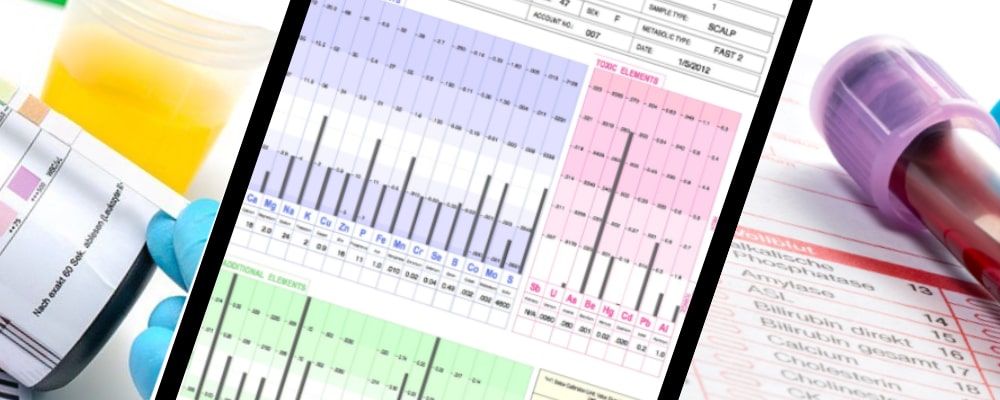
There are currently four primary methods available for testing elements, each with its own pros and cons. Among these methods, "blood tests" are widely what most associate with Medical Doctors and the medical establishment, but did you know they aren't trained in analyzing the dozens of cellular nutritional biomarkers because they aren't taught cellular nutrition in medical school?
Medical schools should prioritize providing students with comprehensive nutrition education, rather than relying on referrals to Dieticians as they sometimes do. This knowledge is essential for future physicians to better understand and address their patients' health needs. However, there is much, much confusion to titles as "dietician," "naturopath," "holistic nutritionist," and "nutritionist" among others. The fact is that most establishment practitioners are also not trained with in-depth cellular nutritional analysis but are instead focused on many outdated and highly inaccurate, generalized assessment tools such as outdated Food Pyramid along without analyzing many scientific concepts.
In essense a substantial portion of holistic or systems nutritionists are trained more closely to what would be termed a "naturopath" but often without many of the restrictions on even the simplest and safest of topics, and are allowed in many jurisdictions advertise their services while "naturopath" often are very limited.
Table Of Contents
- 5 Differences Between Tissue & Blood Testing
- Blood testing only a very limited "snap shot" in time (acute) rather than with a wide range of elements & processes over time (systems or holistic)
- The 4 major tissue type tests along with their individual advantages and disadvantages are:
- Humans, Animals, Plants Are Food Recycling Machines
- Benefits Of Hair Tissue Mineral Analysis
- Appeal to authority; apathy: how lack of understanding keeps us and others around us sick
As you can clearly see the word "nutrition" is far more tame than most realize and it means far, far more than putting food into your mouth.
Blood testing only a very limited "snap shot" in time (acute) rather than with a wide range of elements & processes over time (systems or holistic)
Whole blood testing is widely recognized and commonly used to assess nutritional elements with many practitioners calling themselves "holistic." However, it's important to note that this method only provides a snapshot of element transportation (blood is connective tissue) to and from storage areas in the body, rather than offering a comprehensive view.
Also, Medical Doctors are not allowed, do not possess funding for, and not sigificant training in analyzing the cellular nutritional status of the cells of the body.
"Doctors aren't trained in nutrition or metabolism" is what I heard and it certainly is true, but the truth of it should be more accurate: "MDs are not trained in integrative cellular nutrition and metabolism." Integrative is another word for "holistic" and "systems."
I heard this repeated countless times when growing up but the way the people spoke about it -- who were mainly the females in my life -- was that it was concentrating on "good foods" to eat. This was often vegetables, fruits and other "not manly foods" while the men in my life encouraged the consumption of meat, cheese, and never spoke about measureable amounts of substances in the body.
Rarely any of these people in my life spoke about the view of measuring the substance in these foods and the levels present in the body or made recommendations who to consult about this.
When they did recommend a practitioner or something else, they were using buzzwords such as "holistic" and "nutrition" but these became meaningless over the years when I saw the same people looking and acting worse each year. In essense there were well-meaning, but not very healthy role models in my life that were able to properly communicate these issues. This is probably very common with many as well.
All of these tissue testing types can and are often used in combination with hair tissue mineral analysis as well as systems practitioner questionnaires, physical and behavior observations. It's often very common for the output graph we use to highly correlate with the hair tissue mineral analysis tests as well as others. This often is very surprising even to the most skeptical clients.
This is the confusing propaganda that misleads us all

There's no such thing as a "balanced diet" & nutrition isn't merely food. Why is that? It's because we're all individuals. Orthomolecular nutrition is the individualized analysis application of the substances within the food which our bodies often do not obtain enough of and are often blocked by antagonists.
"Nutrition" is far more than merely the trivial concept of food.
Botanists analyze the terrain to help plants prevent and restore cell function. Why not for humans?
What are YOUR individual cell nutritional imbalances?
The 4 major tissue type tests along with their individual advantages and disadvantages are:
| Test | Advantages | Disadvantages |
| Whole Blood | Very widely accepted, recognized and used in reductionist medical system | May not reflect tissue levels |
| Erythrocytes (RBC) | Intracellular Levels (within cells) | Measures only 1 cell type |
| Urine | Reveals losses | Shows only losses |
| Hair | Intra-cellular levels & Long-term systems view | Potential for contamination |
| Systems Questionnaires | Intra-cellular & Inter-cellular & long-term systems view | Not "static" and not showing quantiafible numbers Is qualitative high approximation of total body processes. Can be used alone as a high approximation or more accuratecombined with quantifiable above MD and specialized tests |
Humans, Animals, Plants Are Food Recycling Machines
In other words, it only shows movement and does not indicate the nutritional status at the tissue level. Additionally, whole blood testing can sometimes yield false indications of balance, particularly when a disease is present. This is because mineral levels in the blood are maintained at a relatively constant level, even in the presence of pathology. The body has inherent mechanisms, known as homeostatic mechanisms, which help regulate and maintain balance in the blood to ensure survival.
The equilibrium of tissues is upheld by sacrificing the tissues themselves. Tissues serve as storage units, with even the hair being examined to gauge the condition of the tissue. Nevertheless, when examining erythrocytes or red blood cells, it solely reveals the internal activity within that particular cell type and does not provide insight into the condition of other cell types like liver cells, heart cells, or neurological cells.
Testing urine can also serve as a means to gauge a person's tissue level, although it may not always be the most ideal method since it solely reveals what is being expelled from the body. It's akin to peering into a trash bin by the roadside, where the contents inside may not necessarily reflect what lies within a person's home.
In a similar vein, urine represents elimination, thus only showcasing what is exiting the body. Nevertheless, it is indeed possible to conduct loading tests to some extent in order to assess one's nutritional status. These tests involve introducing substances like iodine or boron into the body and then measuring the quantity that is subsequently eliminated, which can aid in determining if there is a deficiency of these substances.
Hair testing is a subject that has emerged as a valuable technique for analysis but has traditionally been used by show-animal veterinarians for decades. Hair analysis acts as a dependable indicator of metabolic processes happening within cells, as well as the accumulation of nutritional reserves within cells. Furthermore, it offers a comprehensive record of events that have occurred over a specific timeframe, providing an overall systems or "holistic" picture of metabolic activity.
Moreover, hair can act as a secondary pathway for excretion, offering valuable clues about the substances being expelled from the body. Typically, hair mirrors the compounds found in the bloodstream, revealing their journey towards the tissues. This renders hair analysis advantageous as it offers a comprehensive view of long-term events at the tissue level. Conversely, blood and urine tests provide immediate insights into the body's present condition and the substances being excreted.
What exactly is cellular nutritional symptomatology?
It's the primary (and no extra cost) method we use to determine true health before ordering further tissue and other tests
It's a methodical approach to examining an individual's unique set of symptoms in order to uncover potential nutritional triggers. Well before any illness manifests, there are signs that things might not be functioning optimally. These could be minor discomforts and inconveniences - things we overlook, not realizing cellular nutritional status could be a factor. Even with a "clean bill of health" as told by your often blindly-trusted medical agents such as MDs and nurses, there might be no abnormal test results, yet something 'feels off' to you. Scientists have observed that the body undergoes certain changes when it lacks (or has an excess of) a specific nutrient or with toxicity present. By decoding this "body language," one can pinpoint deficiencies (or surpluses) of particular vitamins, minerals, proteins, and other elements. Through symptom analysis, bodily cues are decoded to identify the root causes.

Evaluating your nutritional status through symptomatology is a dependable method. By responding to 600 questions related to your current diet and supplements, you can gather essential insights to support your overall well-being. This approach offers more precise results compared to traditional blood tests. Detecting nutritional deficiencies in their early stages allows for proactive measures to be taken, preventing potential health issues. This, along with other analyses and tissue tests, provide a comprehensive report detailing your nutrient levels and potential toxicities.
Benefits Of Hair Tissue Mineral Analysis
Virtually all practitioners using this method have witnessed remarkable outcomes in their clients when they begin to incorporate the systems science of mineral balancing. We do simplify things for brevity and it would simply be an overload of information. However, we must mention that clients can experience noticeable benefits relatively quickly. Nevertheless, it does require a significant amount of time to truly enhance chronic conditions.
Why is that? Because minerals are the "spark plugs" of the body and require more time to be replaced and reconfigured during the body-building process that takes shorter times for some tissue types while much longer for others. Think about how your bones are build using calcium, magnesium, manganese and other elements and compare this relatively slow metabolism compared to other cells such as epithelial ones that can be replaced in less than 1 week.
Shifting the status of tissue elements is not a swift process. For instance, it can take up to nine months of daily intake to raise selenium levels to the ideal range. It's important not to rush this process, as taking excessively high doses can lead to negative side effects. So, while it does take some time, you will often observe improvements within a short period, with longer-lasting enhancements in the long run.
All of the above -- including "snap shot in time" blood tests -- form a holistic or systems analysis
Appeal to authority; apathy: how lack of understanding keeps us and others around us sick
Many simply don't question their medical doctor or wait until they become sick as displayed in the image below. When discussing they often commit the fallacy "appeal to authority" mainly because they think they know better because "they have a degree" in that subject yet still become more ill and have children around them that die from various problems. This woman in particular informed me in previous messages that her son also died from a drug overdose. Does she wonder why this is?
It's probably mainly because from her replies below: when she hears anything resembling the word "nutrition" she immediately think it's only the trivial concept of food and she doesn't realize we're made of what we absorb and what our bodies often don't get rid of as the process of metabolism. She likely doesn't also realize there is a whole industry revolving around the specific details and measurements of what we intake and what we don't like toxins that need to be eliminated rather than only shoveling food into our bodies without realizing what's going on inside our temples.

You'll only know what your imbalances are by obtaining an individualized assessment.