Americans are well aware that they often sacrifice a bit of their freedom to politicians in order to obtain a false sense of security. However, what we have now is a population that is overly fixated on security, safety, crime, drugs, cleanliness, hygiene, and germs -- all of these are false senses of security as well. Have you noticed the sudden fear of germs in this country?
Does anyone ever wonder why they become sick with anything especially pathogen-related illnesses?
The media constantly bombards us with stories about the latest infections, such as Salmonella, E.coli, hantavirus, and bird flu. As a result, Americans easily panic and go to extreme lengths to avoid any contact with germs. It has become ridiculous. Comically even in prisons, before administering a lethal injection, they swab the inmate's arm with alcohol to prevent infection. The same goes for schools; they don't want students getting sick.
When it comes to our well-being, it is commonly believed that germs are solely responsible for our illnesses. This belief dates back to the 1800s when Louis Pasteur introduced his Germ Theory, which states that bacteria, viruses, fungi, and parasites are the main culprits behind diseases. According to Pasteur, each disease is caused by a specific germ. Moreover, Pasteur suggested that the human body is free from germs and devoid of any microorganisms. Based on these principles, it is only logical to conclude that we must prevent microbes from entering our bodies and consistently eliminate them to maintain a clean and healthy system. Neglecting to do so would inevitably result in falling ill.
Table Of Contents
- 5 Reasons "Fear Of Germs" Is Unwarranted
- Does anyone ever wonder why they become sick with anything especially pathogen-related illnesses?
- It's not actually "the germs" causing your illnesses & masks are reductionist science
- It's not only a "bad immune system" destined by genetics that increases your risk of becoming sick
- Simply Consuming A "Balanced Diet" Is Nowhere Near Enough
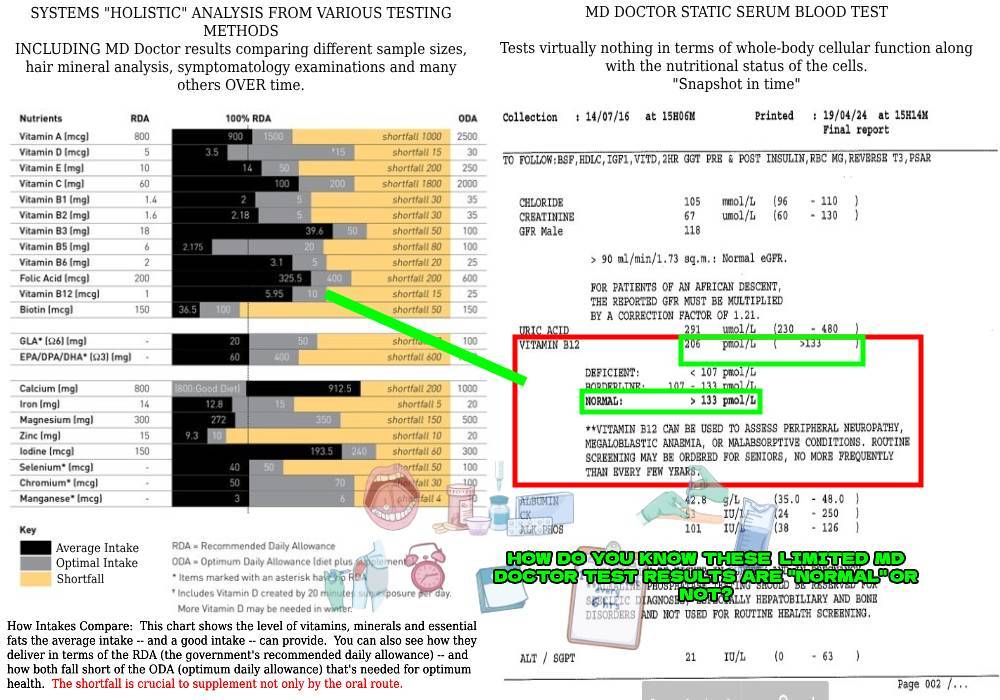
- How do you know what your imbalances are?
Humans, being the way we are, have this natural fear of anything that poses a threat to our lives. And of course, that includes diseases. When the idea of "germs" were first discovered introduced to the public, it became much easier for people to believe that these "tiny invaders" were the cause of illnesses, rather than some mysterious and unknown miasma. As more and more people started fearing the idea of germs leading to diseases, they began accepting this theory as an undeniable fact, even though it had its fair share of flaws. This has ultimately led to the manipulation and misdirection of the minds of today's generation, who are now mostly germ-phobics, desperately obsessed with eradicating germs.
While their concerns are understandable, it's important to maintain a sense of adventure. You can't even enjoy a decent hamburger anymore because everything is overcooked out of fear of food poisoning. But let me ask you, where is your sense of adventure? Take a chance! Did you know that only nine thousand people die from food poisoning in this country each year? It's a minor risk.
It's not actually "the germs" causing your illnesses & masks are reductionist science
Ever seen someone wearing a mask constantly? This is about as absurd as wearing a mask trying to prevent an infection. Why is that? Because you are only concentrating (reducing; separating your body from your mouth) on one aspect: your mouth but what about your eyes, pores in your skin and other mucuous membranes BUT most especially why your body would be susceptible to infection in the first place.
It's time to challenge the widely held belief that exposure to germs automatically leads to disease. Let's take a moment to ponder this: if that were true, why do some people get sick while others remain perfectly fine after being exposed to the same virus? And how did certain individuals manage to survive the devastating Black Plague, even when living in close quarters with infected family members?
Enter Antoine Béchamp's Terrain Theory, a fascinating alternative to the Germ theory. This theory suggests that germs alone are not solely responsible for making us sick. Instead, it emphasizes the importance of our body's internal environment, or body ecology, in determining our susceptibility to illness. When our bodily tissues are weakened and vulnerable due to poor health management, they become an inviting target for harmful germs.
Germs have a natural inclination to gravitate towards unhealthy or dying tissues and cells, as these provide them with a suitable habitat. If they sense that your cellular terrain has been compromised or weakened, they will instinctively attack and invade your system, feasting on your unhealthy cells.
On the flip side, if your tissues are strong and healthy, there won't be a suitable breeding ground for these germs to cause an infection. So, it's not just about the germs themselves, but also about the condition of our internal environment. By prioritizing our health and taking care of our bodies, we can create a robust defense against potential illnesses. It's a fascinating perspective that challenges the conventional wisdom and encourages us to look beyond the surface.
This is the confusing propaganda that misleads us all

There's no such thing as a "balanced diet" & nutrition isn't merely food. Why is that? It's because we're all individuals. Orthomolecular nutrition is the individualized analysis application of the substances within the food which our bodies often do not obtain enough of and are often blocked by antagonists.
"Nutrition" is far more than merely the trivial concept of food.
Botanists analyze the terrain to help plants prevent and restore cell function. Why not for humans?
What are YOUR individual cell nutritional imbalances?
When germs invade your body, it's not uncommon to experience symptoms such as fever, headache, or rash. These symptoms may make you feel like you're "sick" because of the germs, but that's not entirely accurate.
In reality, these symptoms are your body's way of fighting back and trying to heal itself. Your immune system springs into action, working tirelessly to naturally eliminate the infection from your body. Fever, in particular, is a clear indication that your body is effectively battling the infection. It's like your body's own detoxification process, but at a higher temperature. Interestingly, Hippocrates, an ancient Greek physician, grasped this concept more than 2400 years ago when he stated, "Give me fever and I can cure every disease." He understood that what we now refer to as "disease" in modern medicine is actually the body's incredible attempt to recover and heal itself.
It's not only a "bad immune system" destined by genetics that increases your risk of becoming sick
The human body encounters numerous pathogens during its lifetime, which is why it is crucial to enhance and strengthen the immune system to defend against foreign invaders. Nutrients play a vital role in ensuring the immune system develops properly. Optimal nutrition is essential for all cells to function at their best and carry out their respective tasks. "Naturally" occuring substances like vitamin A, D, and C play a crucial role in boosting immune cell differentiation and amplifying the expression of various cytokines. They also play a significant part in promoting the growth of T and B cells and influencing the production of white blood cells. Likewise, trace elements and metals serve as enzyme cofactors, regulating different immune response cycles by controlling the expression of cytokines, chemokines, and other signaling molecules.
In addition, the immune system relies on a variety of essential and non-essential amino acids to support its development. These amino acids are crucial for protein synthesis, which is vital for immune function. Notably, amino acids like arginine, glutamine, and alanine have the ability to influence the production of cytokines and regulate the movement of macrophages. They also enhance the phagocytic abilities of macrophages and neutrophils, further bolstering the immune response. Similarly, fatty acids play a role in reducing inflammation by suppressing the expression of major histocompatibility complex class I (MHC-I) and MHC-II. Additionally, they inhibit the release of various inflammatory cytokines, contributing to a healthier immune system.
Cellular nutrients are essential in combating various viral diseases. They possess the ability to directly engage with the viral pathogens or stimulate immune cells within the adaptive immune system. Interestingly, dietary elements like vitamins have been discovered to bolster the body's growth and repair mechanisms, ultimately leading to a strengthened immune response.
Simply Consuming A "Balanced Diet" Is Nowhere Near Enough
Different individuals have different macro and micro nutrient requirements, which can be influenced by factors such as age, body weight, physical activity levels, and any underlying medical conditions. The good news is that there is a lot of flexibility when it comes to macronutrient intake and distribution.
Does the media frequently tell us we have cellular imbalances? No, but a very small minority of news reports mentioning it are increasing. Despite the inclusion of fortified food in the diet (which are usually deleterious to health due to heavy processing), which provides a significant amount of certain nutrients, there is still a high prevalence of micronutrient inadequacies. This means that many people are not consuming enough micronutrients, as their intakes fall below the estimated average requirement (EAR). To illustrate this, data from NHANES reveals that even when considering micronutrient intakes from all sources, including fortified and enriched food, over 90% of US adults have intakes lower than the EAR for vitamins D and E. Additionally, 61% have inadequate magnesium intake, 51% lack sufficient vitamin A, 49% do not consume enough calcium, and 43% fall short on vitamin C. Furthermore, only a small percentage of US adults meet the recommended adequate intake (AI) for vitamin K (2%) and potassium (39%). These low micronutrient intakes are also prevalent among children aged 2 to 18 years, particularly for vitamins D, E, and K, as well as the minerals calcium and magnesium.
How do you know what your imbalances are?