


Let's delve a little deeper into why optimal cellular nutrition is crucial. There are numerous reasons, but let's focus on these five significant ones. We'll call them the "manly" reasons, as they directly impact your husband's well-being.
Firstly, optimal cellular nutrition plays a vital role in the production of testosterone. Testosterone is a hormone that regulates masculinity, including bone growth, muscle development, and brain function. Adequate levels of testosterone are essential for maintaining brain power. To produce testosterone, men require nutrients like magnesium and zinc. Unfortunately, consuming highly processed foods, chemicals, or drugs that deplete these nutrients can hinder testosterone production.
Furthermore, optimal testosterone levels is crucial for prostate health and preservation. Sadly, prostate gland removal is a common occurrence, often due to cancer. However, it's important to note that prostate cancer is less likely to be fatal than age-related factors.
Table Of Contents
- Links Between Men's Nutrition & Free Testosterone Production
- How Do You "Naturally" Raise Testosterone Levels Before Singular Treatments & Supplements?
- Increasing Free & Total Testosterone Decreases Overall Cancer Risk Alongside Optimal Cellular Nutrition
- Where Did "Steroid Fear" Originate?
- Testosterone Supplementation: Don't Use As "Band-Aid" Your MD uses
- Avoid Prostate Removal
In simpler terms, men usually don't die from prostate cancer. However, if they live long enough, they may develop it. Prostate cancer is a slow-growing type of cancer and is typically not fatal. Unfortunately, doctors often exploit the fear of cancer in men to convince them to have their prostates removed. This can have devastating consequences for men, especially because it doesn't necessarily address the cancer itself. Instead, it often leads to damage to a man's sex life, which is a crucial aspect of his well-being. Remember, physical touch and connection are essential for men. Removing the prostate puts men at risk of irreversible harm and impairs their ability to engage in sexual activities. Therefore, it is crucial not to let fear guide your decisions if you have been diagnosed with prostate cancer.
Prostate enlargement has been strongly associated with a deficiency in zinc, elevated cadmium levels, and an abundance of estrogens and xenoestrogens. These factors have been found to contribute to the atrophy of the testes, decreased sperm count, smaller penises, and an increased risk of prostate and testicular cancer. It is crucial to address these underlying causes to maintain optimal prostate health and overall well-being.
How Do You "Naturally" Raise Testosterone Levels Before Singular Treatments & Supplements?
The first step is not to following a generalized diet, a handful of fad supplements and other generalized advice. Why is that? Because the only evidence you rely on are often misleading claims from word-of-mouth, claims on advertisements and directions at the back of a bottle of supplements.
We need to jettison the idea of a "take this for that" mindset because our bodies are not a singular organism. We need to receive individualized assessments from a systems biology practitioner to determine what the body needs and what it doesn't need. In essense you need to attain optimal cellular and system function for a period of time by modifying your lifestyle, diet, supplement and medication regime before attemping to address singular issues like testosterone in any form.
Once you address you first address your individual terrain status and attempt to raise all your cellular functions to optimal then you can attempt to try a singular testosterone-raising treatment or set of supplementation regimes.
Increasing Free & Total Testosterone Decreases Overall Cancer Risk Alongside Optimal Cellular Nutrition
A total testosterone test measures free testosterone and testosterone that's attached to proteins. This is the most common type of test. A free testosterone test measures only the "active" form of testosterone. This test is less common, but it may be useful for diagnosing certain medical conditions
For decades the medical establishment dogma was that excess testosterone was an indicator for prostate cancer, but the fact is that if we develop declining testosterone levels as we age along with many other declining biomarkers, why would the dogma claim this? The fact is actually the opposite: free and total testosterone decreases are correlated with increased risk of many cancers, but especially prostate cancer development.
This is the confusing propaganda that misleads us all

There's no such thing as a "balanced diet" & nutrition isn't merely food. Why is that? It's because we're all individuals. Orthomolecular nutrition is the individualized analysis application of the substances within the food which our bodies often do not obtain enough of and are often blocked by antagonists.
"Nutrition" is far more than merely the trivial concept of food.
Botanists analyze the terrain to help plants prevent and restore cell function. Why not for humans?
What are YOUR individual cell nutritional imbalances?
Until just a few years ago, the prevailing belief was that testosterone therapy (T therapy) would inevitably increase the risk of prostate cancer to some extent. It was seen as a risky trade-off, sacrificing short-term sexual and physical benefits for the potential development of a malignant cancer. However, fortunately, recent evidence has proven this belief to be incorrect, leading to a significant shift in medical opinion. It is now widely accepted that T therapy is actually safe for the prostate. In fact, there is even a growing concern that low testosterone levels may pose a greater risk for prostate cancer than high testosterone levels.
The male HPG axis, or hypothalamic-pituitary-adrenal, is influenced by a variety of factors such as body weight, diet, sleep quality, and stress levels. In individuals with a healthy weight, a diet with below-average caloric value may lead to a decrease in testosterone levels. However, in obese individuals, the same caloric deficiency may have a neutral or even positive effect on testosterone levels.
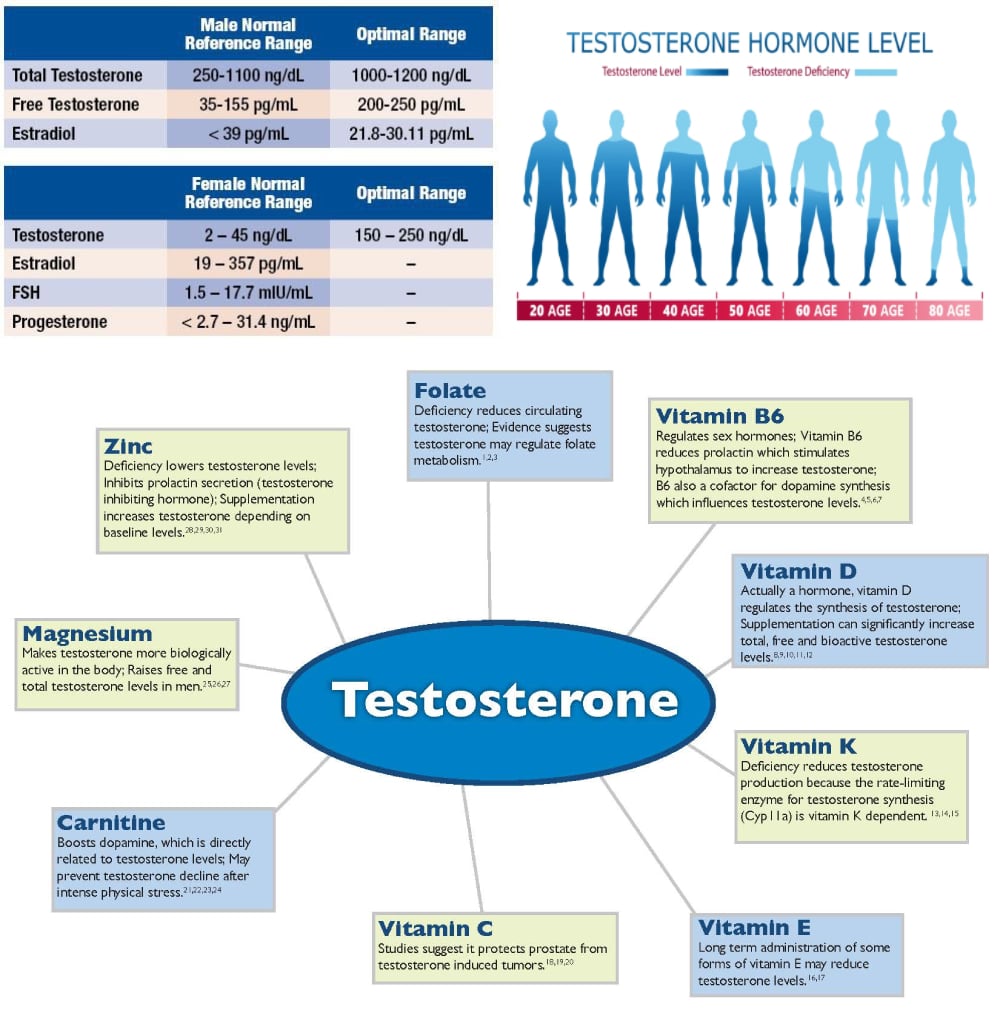
It's important to note that testosterone levels are impacted by both internal and external factors, including nutritional deficiencies in zinc, magnesium, and vitamin D, as well as low polyphenol intake. Mental and oxidative stress can also have a negative impact on the HPG axis. Therefore, diagnosing the cause of testosterone level disturbances requires a comprehensive approach that includes lifestyle changes and extensive research.
The incredible tale of how the initial apprehension surrounding T and prostate cancer originated is a captivating narrative filled with Nobel Prize laureates, groundbreaking medical advancements, and a perplexing paradox that took a staggering 66 years to unravel. Ultimately, it serves as a stark reminder of the arduous journey it can take to rectify a long-standing medical "fact."
Where Did "Steroid Fear" Originate?
The fear surrounding the potential link between T therapy and prostate cancer can be traced back to the groundbreaking research conducted by Charles B. Huggins, a renowned urologist from the University of Chicago. Initially, Huggins focused on studying a medical condition known as benign prostatic hyperplasia (BPH), which causes bothersome symptoms like frequent and urgent urination, and in some cases, complete blockage of the urinary tract. Interestingly, historical records suggest that even Benjamin Franklin suffered from BPH and devised a tube to alleviate the obstruction by inserting it through the urine channel.

What's even more intriguing is that dogs, apart from humans, are the only species known to naturally develop prostate problems on a regular basis. In the early 1900s, there were reports suggesting that castration could effectively treat severe cases of BPH in men. Motivated by these findings, Huggins embarked on a series of experiments to investigate the effects of castration on BPH in dogs. To his astonishment, not only did the dogs' prostates shrink after castration, but Huggins also made a groundbreaking observation that would have far-reaching implications.
It's quite interesting to note that dogs are the only species, besides humans, that experience prostate issues on a regular basis. Back in the early 1900s, there were accounts of castration being an effective treatment for men with severe obstruction from BPH. This led to Huggins conducting experiments on the effects of castration on BPH in dogs. The results were astounding - not only did the dogs' prostates shrink after castration, but Huggins also made a groundbreaking observation.
Huggins and his colleagues then applied his findings from studying dogs to humans. At that time, it was already known that castration had a significant impact on reducing testosterone levels in the blood. Huggins conducted an experiment with a group of men who had prostate cancer that had spread to their bones. He either removed their testicles or administered estrogen to lower their testosterone levels.
They discovered that a blood test called acid phosphatase, which was high in men with metastatic prostate cancer, dropped significantly within days of reducing testosterone. What was even more significant for the future of testosterone therapy was that Huggins also found that administering testosterone injections to men with prostate cancer caused acid phosphatase levels to rise. Based on these findings, Huggins and his colleagues concluded that reducing testosterone levels caused prostate cancer to shrink, while raising testosterone levels led to the "enhanced growth" of prostate cancer.
The discovery of the androgen dependence of prostate cancer was a groundbreaking moment in the early 1940s. Prior to this, prostate cancer was considered untreatable. However, with the realization that lowering testosterone levels through castration or estrogen therapy could effectively combat the disease, a new era of treatment began. These methods became the standard approach for advanced prostate cancer and continue to be widely used today. Despite the effectiveness of estrogen therapy, it had its drawbacks, such as an increased risk of heart attacks and blood clots. Additionally, many men were reluctant to undergo testicle removal. To address these concerns, a revolutionary medication called LHRH agonists was introduced in the 1980s. This medication, administered through injections, has now become the preferred method for reducing testosterone levels in men with prostate cancer.
In 1966, Huggins was honored with the prestigious Nobel Prize for his groundbreaking research, which revealed the correlation between T levels and the growth or reduction of prostate cancer. For a long time, this widely accepted belief about the connection between testosterone and prostate cancer remained unchallenged.
Basically what these studies are indicating is that the supplemention of testosterone esthers is a perfectly safe, effective method to raising low free and total testosterone because all other methods to do so including herbs, consistent diet, and supplementation of nutrients supporting production of it are not as effective or consistent as using testosterone esters.
This is not to say that balancing cellular nutritional status of the body should be ignored. It should be one of the first concepts you address before starting any form of testosterone ester (TST) treatment also called "hormone replacement therapy." This could also include the use of clomiphene (CC). The research has shown that both TST and CC are effective treatments for hypogonadism. However, TST has been found to be more effective in increasing serum testosterone levels and alleviating hypogonadal symptoms. While CC is still a viable option for treating hypogonadal men, its impact on libido requires further investigation.
Testosterone Supplementation: Don't Use As "Band-Aid" Your MD uses
Although it may be tempting for men to immediately hop to TST or CC as methods to raise testosterone and "feel great" as many men report, it should be noted as we always do, that we should not neglect the overall cellular functions and nutrition and it should be the first aspect you address first. Jumping to any one singular drug, nutrients or concept should not be on your radar. That is, you have to realize why you may be prescribed this substance and how it makes you "feel good.: Age is a huge factor as to why many men lose the productive capability to make testosterone on your own, but our work environments and diets as well play a major role. It's highly probable supplementing exogenous testosterone is inevitable, but it's proper responsible practice to address the overall cellular health of the individual first.

Avoid Prostate Removal
Ladies, if your husband has been diagnosed with prostate cancer and the doctor is recommending prostate removal, it's important to seek a second and even a third opinion. While not all urologists or prostate doctors are motivated by financial gain, some may be incentivized to perform expensive surgeries that may not be necessary. This is why it's crucial to get multiple opinions before making any decisions. I've seen cases where patients were told they needed surgery, only to find out from a second doctor that it wasn't necessary at all. So, don't be afraid to seek out additional opinions to ensure you're making the best decision for your husband's health.
This cancer grows at an extremely slow pace, so there's plenty of time for you to receive and individual assessment and potentially start supplementing with testosterone esther..It's important for men to keep their prostate intact and fully functional like any other organ you were born with.. Testosterone plays a crucial role in muscle growth, or rather, muscle maintenance. It's not so much about gaining muscle, unless you're starting from a low muscle mass and working out to build it up. The key is to preserve what you already have.
There's a term in medicine called sarcopenia, which refers to the age-related loss of muscle, and you definitely don't want that happening to your husband or yourself. To maintain strong muscles, it's essential to maintain healthy testosterone levels. We'll discuss later some things that can harm testosterone production, but optimal cellular nutrition is absolutely critical. I mentioned magnesium and zinc earlier, and we can also include amino acids (protein) in the mix, especially with the rising popularity of plant-based diets and their perceived health benefits.
It's fascinating how protein (amino acids) plays a crucial role in testosterone production for men, as well as muscle growth and bone maintenance. Recently, a research study focused on vegan women revealed that increasing their protein intake by 25 grams per day could reduce their bone loss. This finding is not limited to women alone; men also need to be mindful of consuming enough protein to maintain their muscle and bone health. Therefore, it is essential to prioritize good systems nutrition and not solely rely on high-carbohydrate processed foods. It's worth mentioning that women often nag their husbands about consuming excessive amounts of meat, which has become somewhat of a societal cliché. Unfortunately, there is a misconception surrounding the link between meat consumption and cardiovascular disease, a leading cause of death in men. As a result, cardiologists often advise wives to discourage their husbands from eating too much meat and instead focus on consuming more vegetables. However, this shift in diet may inadvertently lead to a decrease in protein intake, ultimately affecting testosterone production.
It's important to note that reducing meat consumption can have negative effects on a man's health.
As men age, they require a certain amount of protein to maintain their muscle mass and overall health. So, while it's important to be mindful of portion sizes, it's not necessary to completely eliminate meat from a man's diet. In fact, meat can be a healthy and important part of an individualzed diet. So, ladies, don't be too quick to judge your husband's meat consumption. Instead, focus on an individualized assessment of his health and this is only done with specialized help mainly from systems nurtitionists.
The brain relies on its power to function properly. It utilizes various chemicals, such as serotonin, dopamine, and acetylcholine, which are known as neurotransmitters. But have you ever wondered where these chemicals come from? Well, they actually come from our diet. They are derived from protein, amino acids, vitamins, and minerals. So, if a man has a poor diet, lacking in protein and essential nutrients due to consuming high-calorie, low-nutrient foods, it will undoubtedly affect his thinking ability and memory. As men age, they are prone to various diseases like heart disease, Dementia, Alzheimer's disease, diabetes, and metabolic syndrome. These conditions can significantly impact cognitive function. Therefore, it is crucial to prioritize systems nutrition in order to preserve these five essential reasons for optimal brain health.
References: