


Within the female-dominated "holistic medicine" field there exists ways to determine the female reproductive cycle's influenced by the lunar cycle but they virtually never mention the effect of the moon on males' fertility.
Don't believe me? This is a very large topic, but articles like this shed only a "progressive" feminist lens and call the reductionist "conventional" medical model patriarchal as if it were still dominated by men. They virtually never talk about why men in the past dominated many areas of the world: because they devote their lives (and very long work hours) to developing and earning a living for the family and hence society.
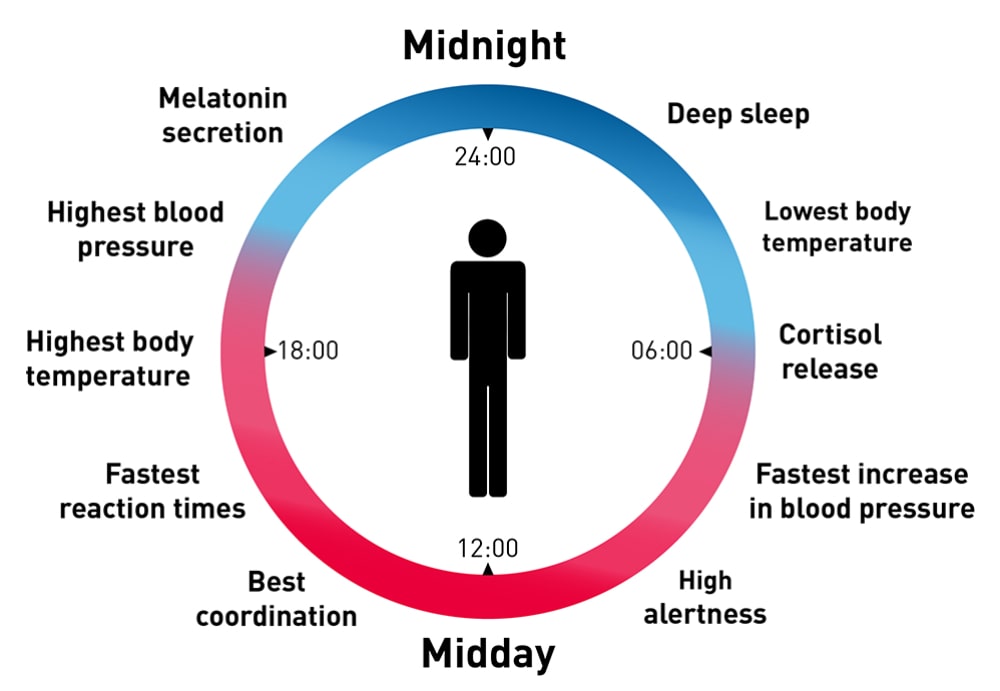
The fact is there is a growing body of evidence indicating a strong link between the circadian clock and male fertility, with disruptions to the circadian rhythm contributing to infertility. Factors such as night shift work, inadequate sleep, and poor sleep quality are commonly associated with circadian disturbances, and numerous studies have highlighted their negative impact on sperm quality and the increased risk of male infertility.
Table Of Contents
Several studies indicate that light has a greater impact on the brains and circadian rhythm of men compared to women. Consequently, the varying intensity of lunar illumination throughout the night might have a more pronounced effect on male fertility than on women. Knowing all this we can conclude that modalities of "alternative health" have relatively zero recognition of how the lunar cycles of the earth affect male fertility. All you need to do is look into the curriculum of many modalities to see it's female-oriented, especially dealing with men's health and the effect of the lunar cycle on males.
The below article delves into the concept and how the lunar cycle more strongly affects men than women, yet the lack of recognition of this is in many modalities especially "systems nutrition" or frequently called "holistic nutrition" shameful. This is yet another reason why men shy away from pursuing careers in these fields and why they delay seeking proper treatment for their health in a systems fashion.
According to a researcher, men tend to have shorter sleep duration and lower sleep quality compared to women in the days leading up to the full moon. While there are several possible explanations for this phenomenon, no definitive conclusions have been reached yet.
It is widely believed by many individuals that their sleep is disrupted during a full moon compared to other phases of the 30-day lunar cycle. For centuries, both scientists and ordinary people have been captivated by the potential influence of the moon on our sleep patterns. A recent study has now provided evidence supporting this notion. In this study, researchers meticulously analyzed the duration and quality of sleep during two specific periods: from the day after the new moon until the day of the full moon (the waxing period), and from the day after the full moon until the day of the new moon (the waning period). Surprisingly, the findings indicate that the lunar cycle seems to have a stronger impact on men than on women.
Lunar cycle affects men's circadian rhtym's fertility than women
Numerous variables influence sleep, encompassing age, gender, health condition, parental responsibilities, marital status, physical activity, medication, and surroundings. According to Christian Benedict, an Associate Professor and Principal Investigator at the Department of Neuroscience, Uppsala University, Sweden, the findings of this research also indicate that the lunar cycle has an impact on the length and quality of sleep, with a more noticeable effect observed in males.
Explored a pair of lunar cycles
Christian Benedict and his team focused their research on the differences in sleep quality between the waxing and waning periods of the lunar cycle, rather than investigating how people sleep during a full moon. Benedict highlights the significance of examining these two periods due to the varying times of illumination during the night. During the waxing period, the illumination occurs later in the day and early night hours, while during the waning period, it shifts from early night-time to daytime hours. Benedict suggests that if changes in sleep quality are influenced by this illumination, the impact may vary depending on the time of day or night when an individual is exposed to the light.
Christian Benedict conducted an in-depth analysis of sleep measurements recorded by a colleague between 2001 and 2019 to shed light on the matter. Unlike other sleep researchers who use wrist accelerometry to measure sleep activity, this study utilized polysomnography electrodes attached to the head and face of the participants, resulting in a more comprehensive measurement of sleep. The data was collected as part of a research project aimed at mapping sleep apnoea, with 850 participants aged between 20 and 80 years old, and slightly more men than women. The extensive data also provided insights into the participants' sleep apnoea, which could impact sleep quality, allowing for a more thorough analysis of the results.
This is the confusing propaganda that misleads us all

There's no such thing as a "balanced diet" & nutrition isn't merely food. Why is that? It's because we're all individuals. Orthomolecular nutrition is the individualized analysis application of the substances within the food which our bodies often do not obtain enough of and are often blocked by antagonists.
"Nutrition" is far more than merely the trivial concept of food.
Botanists analyze the terrain to help plants prevent and restore cell function. Why not for humans?
What are YOUR individual cell nutritional imbalances?
Carefully reviewed in-depth data analysis
Christian Benedict conducted a thorough analysis of sleep measurements collected by a colleague between 2001 and 2019 in order to shed light on this matter. While some sleep researchers rely on wrist accelerometry to measure sleep activity, this study took a much more comprehensive approach. It utilized polysomnography electrodes attached to the head and face of the participants to obtain detailed sleep data. The data was collected as part of a research project focused on mapping sleep apnoea. The study included 850 participants ranging from 20 to 80 years old, with a slightly higher proportion of men than women. "These extensive data also provided valuable insights into the participants' sleep apnoea, which can impact sleep quality. By examining the data for this factor, we can achieve even stronger results," explains Christian Benedict.
Men Received Less Quality Sleep Than Counterparts
The discrepancies in both the duration and quality of sleep were observed during the waxing and waning periods, with the lunar cycle exhibiting a significantly stronger correlation with these variances among males.
- During the moon's waxing period, men experienced an additional 20 minutes of wakefulness at night compared to the waning period. However, there was no significant difference observed among women.
- Furthermore, men's sleep efficiency was found to be 3.5% lower during the waxing period.
- On the other hand, women slept 12 minutes less during the waning period, while men slept 21 minutes less during the same period.
Christian Benedict notes that the data collected for the research on the association between the lunar cycle and sleep quality were obtained without the participants' knowledge of its future use. It is noteworthy that this lack of awareness did not impact the study's findings.
Explanations are numerous
Christian Benedict suggests that there are various explanations for the differing effects of the two lunar phases on sleep, as well as the potential differences between men and women.
- One possibility is that light affects men's brains and circadian rhythm more strongly than women's. This could mean that the intensity of lunar illumination at different times of the night affects men more than women. Another possibility is that hormones, such as melatonin and testosterone, play a role, with some studies showing lower blood concentrations of these hormones in the days before a full moon.
- The moon's gravity may also affect sleep differently, with the waxing period having a greater gravitational pull earlier in the day than the waning period. Additionally, the moon's effect on the Earth's geomagnetic field may influence melatonin production.
- Finally, other factors such as animal behavior may also impact sleep. Benedict notes that while these possibilities are speculative, the lunar cycle does appear to affect sleep, with a more pronounced effect on men. However, it is important to note that the lunar cycle may not be the main cause of this association.
References
https://sciencenews.dk/en/lunar-cycle-appears-to-affect-men-more-strongly-than-women
https://www.frontiersin.org/articles/10.3389/fendo.2022.1001316/full