

There are some common yet overlooked reasons why people struggle to maintain or start manual labor or sedentary work. While some may simply say "people are lazy" or "people don't want to work," the truth is that cellular nutrition plays a crucial role in determining one's endurance, cognitive and energy levels, especially in physically demanding jobs. Without proper cellular nutrition, no amount of exercise will prepare you for the challenges of manual labor or ewen a sedentary but extremely challenging desk work position.
Contrary to what most think, a "balanced diet" doesn't exist especially when we look at the individual and all the often 'hidden' health problems we aren't screened for at "conventional" medical offices.
A key factor is overusing the same muscle groups without allowing them time to recover, leading to muscle fatigue and stagnation in progress. So, it's not just about working hard, but also working smart and taking care of your body.
Table Of Contents
- 19 Physical & Biochemical Reasons Why "People Don't Want To Work": It's Far From Simply 'Laziness'
- Back Pain: A Common Problem Preventing People From Working: What Causes It?
- Why would celiac people present with back pain?
- Does A "Gluten Free" intake decrease back pain?
- What if back pain isn't helped by a reduction or elimination of gluten?
- Your Epi-genome Influenced By Your Intake; Genetics Not Written In Stone
- Uncover How 11 Key Substances Can Influence Your Endurance, Energy & Ability To Work & Reduce Fast Aging
- 8 common organ function issues preventing people from working
- 6 General Ways To Mitigate Common Nutrient Deficiencies & Improve Organ Function
- Choose Frozen Vegetables (organic is impractical for most)
- Choose food combinations to enhance absorption
- Feed Your Microbiome
- Reduce Your Stress
- Top-up Deficiencies With Supplementation
- What are your levels of the above and more?
Main factors why people "don't want to work" and rarely mentioned by the media which often pushes an anti-worker narative:
- The money they earn can't buy the amount of goods and services they used to. 30 to 40 years ago $1 was worth much more than it is today. A minimum wage could pay for many things including a family.
- Savings in banks and credit unions do not pay the higher interest they used to, thus this dissuades the motivation to work.
- Taxes and govern-ment fees also dissuade the motivation to work as many -- especially these days -- realize much of it is wasted and could be better spent on the individual level.
- Physical and mental problems mainly due to poor cellular nutrition & organ function and thus lack of endurance, stamina and cognitive function to perform especially tedious, arduous and physically-demanding tasks.
- Medical care, up until around the 1940s in the Western world, used to be more centered around systems science (more holistic view) with a focus on cellular nutrition. Now it's mostly "sick care" and revolves around reductionistic acute symptom management.
- Housing prices have been astronomical in the past 4 years but very bad over the past 25 years in most of the western world and this leaves little funds for concepts such as leisure time and especially funds for extra help with health.
"Nobody Wants To Work Anymore" has been repeated for thousands of years without any scientific or logical explanation except putting down your neighbor, family members and many others and is still repeated today.
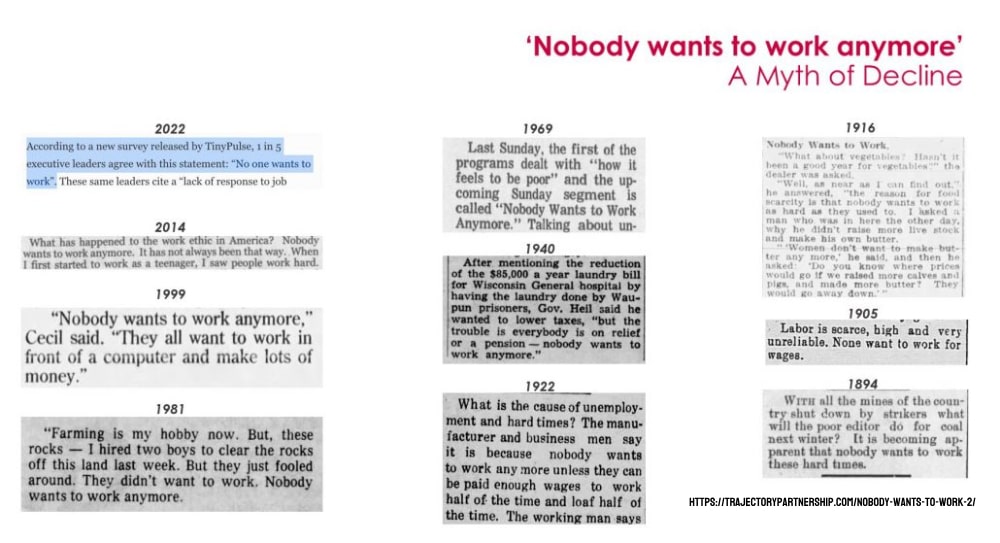

In North America and Western nations, there used to be a lot of entry level jobs like toll payment worker, shopping center parking lot attendant, and cashiers with multiple registers. But now, people are being pushed to get more qualifications for these jobs, even if the qualifications aren't really necessary. This is called credentialism or qualification inflation, and it means that educational credentials are becoming less valuable over time. Many jobs are disappearing because of technology and automation, which is linked to the increase in the money supply and decrease in purchasing power. While it might save money, it also widens the gap between rich and poor and leads to more crime in the long run.
Do you actually believe "official" information such as this? Polls like this show the reality

As if all the above realities of especially the Canadian working and societal life in at least Canada wasn't enough, we have to deal with "real life " scenarios such as biochemical and bio-mechanical problems with our bodies that are very rarely addressed in a random Medical Doctor's office.
This is the confusing propaganda that misleads us all

There's no such thing as a "balanced diet" & nutrition isn't merely food. Why is that? It's because we're all individuals. Orthomolecular nutrition is the individualized analysis application of the substances within the food which our bodies often do not obtain enough of and are often blocked by antagonists.
"Nutrition" is far more than merely the trivial concept of food.
Botanists analyze the terrain to help plants prevent and restore cell function. Why not for humans?
What are YOUR individual cell nutritional imbalances?
Back Pain: A Common Problem Preventing People From Working: What Causes It?
A recent research focused on the connection between low back pain and inflammation. The findings revealed a remarkable 80% reduction in low back pain following the adoption of a gluten-free diet. While this is certainly promising, further investigations are necessary to fully understand this relationship. We're all eager to learn more about this potential link in the near future. According to many Medical Doctors with a functional-medicine slant, they have observed a possible association between gluten sensitivity and back pain. However, without a clear understanding of the causes of gluten and wheat sensitivity, proving this scientifically will remain a challenge. If you are suffering from back pain, have been screened for celiac disease, and continue to consume gluten, it may be worth considering a trial of a gluten-free intake. It is important to undergo testing for celiac disease before making any changes to your intake.
There's very limited information in medical literature regarding the link between celiac disease and low back pain, but the available data is quite significant. In a study focusing on back pain and sacroiliitis, it was found that 70% of adult celiac patients exhibited changes or involvement of the sacroiliac joints. These individuals were adhering to a gluten-free intake and did not report any gastrointestinal symptoms, yet the changes were still noticeable. There have been a few case reports of celiac patients with osteopenia or osteoporosis where back pain was identified as their initial symptom of celiac disease. Besides these cases, there is scarce information on the occurrence of low back pain in celiac disease either before or after diagnosis. Based on many own observations, low back pain as a symptom of celiac disease, and it often gets better after starting a gluten-free intake. However, it tends to come back if gluten is reintroduced.
Why would celiac people present with back pain?
Celiac disease, an autoimmune condition, may have a connection to low back pain as suggested by a recent study. It's possible that inflammatory reactions play a role in causing this discomfort. The studies mentioned in this article indicate that inflammation is a common factor in the spines of many celiac disease patients.
Does A "Gluten Free" intake decrease back pain?
While a gluten-free intake may bring relief to some individuals with celiac disease, it's important to note that not all back pain is related to this condition. An intriguing 2014 case report highlights a situation where chronic low back pain persisted despite traditional treatments, only to be resolved through an integrative medical approach that included a gluten-free intake. This case serves as a reminder to explore unconventional solutions when conventional methods fall short in addressing chronic low back pain.
What if back pain isn't helped by a reduction or elimination of gluten?
If the pain persists or worsens despite adhering to a gluten-free intake for a few weeks, it's important to seek additional evaluation for potential underlying causes. If you experience recurrent back pain as a symptom of celiac disease, it's crucial to consider gluten exposure as a possible cause if you continue to have symptoms after starting a gluten-free intake. For more information on managing ongoing symptoms, click the link provided below.
- Lower back strain: strain or injury to the muscles in the lower part of the back
- Bulging disc or deteriorating disc
- Spondylolisthesis: an abnormal minor shift of the bones of the spine, which can occur with aging
- Arthritis
- Fractures
- Osteopenia and/or Osteoporosis
- Autoimmune diseases like rheumatoid arthritis and ankylosing spondylitis can occur
- Hormonal changes, such as PMS for females and Andro-pause for males
There likely is also underlying cellular nutritional causes such as:
- Heavy metal toxicity such as excess mercury
- Excess sulfur
- Vitamin D deficiency
Your Epi-genome Influenced By Your Intake; Genetics Not Written In Stone
Your epi-genetic (not merely "genetic") makeup is crucial for your health, but epigenetics reveals that lifestyle choices and surroundings can impact gene expression. Nutritional deficiencies are a key factor in silencing specific genes within our DNA. Vulnerable groups such as children, pregnant women, and the elderly are at a higher risk of lacking essential nutrients.
For years, the prevailing belief in genetics was that our DNA determined our fate from the moment of conception, locking in our health trajectory. We thought of DNA as the master controller of our existence, guiding us towards specific health outcomes. This genetic code was like an inheritance that predetermined our future. DNA transmitted instructions to RNA, which then relayed information to proteins. We were essentially the end result of this genetic process. Since we couldn't send information back up the chain, we were led to believe that we had no power to alter our DNA and therefore couldn't influence our health outcomes. This notion shaped the entire conventional medical system, which focused on managing our genetic fate as best as possible. However, the emerging field of epigenetics is challenging this long-held belief by suggesting that DNA does not dictate our destiny.
Your diet and intake may not change your genes, but it can definitely affect how those genes behave. Research suggests that cellular nutrition plays a crucial role in gene expression, even starting before birth. Studies have found that babies born during times of famine or malnutrition may experience epigenetic alterations like reduced methylation.
Uncover How 11 Key Substances Can Influence Your Endurance, Energy & Ability To Work & Reduce Fast Aging
| Substance Imbalance | Effects |
| Iron | Weariness, Decreased thyroid function, Digestive problems, Stomach upset, Sickness. |
| Vitamin B12 | Oral sores, Blurred vision, Tiredness, Emotional shifts, Numbness and tingling, Inadequate methylation. |
| Vitamin D | Anxiety, sadness, hair thinning, bone weakening, muscle and back discomfort, gaining weight, muscle wasting, weakened immunity, insulin resistance, calcium deficiency leading to osteoporosis, fatigue, fragile bones, heart and blood pressure issues, and blood clotting problems. |
| Magnesium | Exhaustion, Feebleness, Reduced hunger, Upset stomach, Tingling sensation, Cramps, Convulsions, Irregular pulse |
| Omega 3 | Tiredness, forgetfulness, dry skin, heart issues, mood changes, and circulation problems. |
| Iodine | Sudden weight gain, tiredness, hair loss, dry skin, heart rate changes, irregular periods, Vitamin B9 deficiency, anemia, low energy, weak immune system, digestion issues, mood swings, early grey hair, pregnancy and infancy development problems. |
| Vitamin C | Persistent exhaustion, inflamed and bleeding gums, easy bruising, lower collagen production. |
| Zinc | Taste or smell loss, Low appetite, Sad feelings, Weakened immune system, Slow wound healing, Upset stomach, Balding, Slow thyroid function |
| Manganese | Athletic injuries can happen easily, especially with weak ligaments due to low manganese levels. The body may add extra calcium to stiffen joints over time, causing discomfort. Manganese is essential for activating enzymes needed to utilize various vitamins. |
| Endrocrine Hormones | Free and total testosterone, especially free testosterone, has been dropping in the male and female population drastically over the decades. Others like DHEA have also been affected and endrocrine hormones present drastic problems for especially physically laborious tasks and the ability to maintain muscle mass. |
These factors are virtually never mentioned by even "holistic" publications often found online. They mainly only concentrate on the concept of singular nutrients without providing the interaction between them and bodily functions.
8 common organ function issues preventing people from working
These and other issues are virtually always the precursors to disease label conditions from medical doctors and helps to explain why we eventually present with these conditions that prevent many from working. How else do these label diseases develop? It's because of the deterioration of your body's cells along with other factors such as epi-genetics and genetics. Genetics aren't written in stone as we previously mentioned.
| Underactive Adrenals | Just like an underactive stomach, an underactive adrenal system is a common issue that many people face. The connection between the two is strong - underactive adrenals can lead to stress, which then impacts the digestive system! |
| Underactive Thyroid | Underactive thyroid is a prevalent condition that appears to be on the rise annually. One hypothesis suggests that the continuous exposure to free radicals and radiation from modern lifestyles may be a contributing factor. This condition is associated with deficiencies in iodine and selenium. Moreover, underactive thyroid is connected to elevated levels of mercury due to its displacement of iodine. Additionally, it is interrelated with all other glands of the endocrine system, including the adrenals, gonads, pancreas, and pituitary. |
| Underactive Adrenal Glands | When adrenal glands become underactive, it's often preceded by a period of overactivity due to excessive stress. It's important to address this symptom in the same way as underactive adrenals. A few factors are the absence of necessary nutrients such as vitamin C, pantothenic acid, potassium, B12, vitamin E, and choline. |
| Hidden Allergies | Food sensitivity or intolerance is another issue related to allergies. It happens when someone consumes too much of a certain food that their body can't handle. Food intolerance may be due to a genetic problem that causes a lack of the necessary digestive enzyme. It's hard to tell the difference between these two conditions. Allergic reactions typically affect the respiratory system, digestive system, and skin. Symptoms may involve diarrhea, vomiting, mouth swelling and pain, skin burning and itching, hives, and breathing difficulties. |
| Hypoglycemia | Eating too much sugar and starch can cause hypoglycemia. It's common, but can be managed with a proper intake. Intakes high in sugar may be a way for the brain to function in a body with stomach and liver issues. |
| Candidiasis & Fungal Infections | Candidiasis, also known as candida albican, occurs when there is an excessive growth of a yeast fungus in the intestines. This is often due to inadequate colon management resulting from diets lacking in fiber and high in processed foods. Candidiasis can lead to heightened chemical sensitivity because the candida fungus releases toxins such as alcohol, acetylaldehyde, and carbon monoxide, which may explain why individuals become more sensitive to petrochemicals. |
| Low Stomach Acid | A stomach that is not very active does not make sufficient hydrochloric acid (HCl) and enzymes to properly digest food. Pepsin, the enzyme that breaks down protein, only works when there is HCl in the stomach. Parietal cells in the stomach release HCl, which changes pepsinogen into pepsin (to break down protein) and triggers intrinsic factor (for B12 absorption). |
| Liver/Gallbladder Insufficiency | When the liver or gall bladder are slow, there is not sufficient bile going to the duodenum. Bile helps break down fats so that pancreatic lipase can work on them. Bile also helps prevent constipation, kills bacteria, aids in the absorption of essential vitamins and minerals. Vitamin C, magnesium, choline, and zinc are essential for bile production. Insufficient bile can lead to pale, floating stools. Possible reasons include consuming moldy foods like nuts, peanuts, popcorn, corn chips, dried fruits, and packaged cereals, as well as exposure to environmental toxins from household and personal care products. Overeating fatty and junk foods is likely the main reason for liver and gallbladder issues. |
6 General Ways To Mitigate Common Nutrient Deficiencies & Improve Organ Function
Choose Frozen Vegetables (organic is impractical for most)
While food that is grown locally (less transportation required) and is labelled as Organic is much more likely to have higher nutritional content than non-organic imported food it's impractical and too expensive for most to go this route. Down this route and you'll be less likely to even eat proper, individualized amounts of prodoce. A better way is to obtain frozen produce.
Frozen fruits and vegetables are frequently richer in nutrients compared to their fresh versions. When produce is harvested for freezing, it is picked at its peak ripeness. The nutrients are then locked in during the freezing process, preserving the vitamins, minerals, and other phytonutrients. On the other hand, fresh produce is picked before it fully ripens, then stored for transportation and distribution. A packet of frozen fruit or vegetables is often more nutrient-dense and will remain fresh until you are prepared to cook and consume them. Enjoy frozen berries throughout the year for a boost of antioxidants and vitamin C.
Frozen produce is often lower cost, easier to prepare and easier to obtain than fresh selections.
Choose food combinations to enhance absorption
Pairing certain foods and nutrients can significantly improve their absorption and effectiveness. However, as we explore below: how do you know what your levels are of these substances? Many people wrongly believe (and that's not knowing) they are obtaining enough yet still present with subtle and obvious symptoms such as greying hair, muscle loss, cloudy thinking and many others.
| Fat-soluble Vitamins | To absorb Vitamins A, D, E, and K, it's important to consume them with some fat. For example, pairing red/orange foods such as carrots, red peppers, and sweet potatoes with olive oil, avocado, nuts, or salmon can help convert the provitamin A carotenoids into Vitamin A. |
| Vitamin C & Iron | Boost your iron absorption by pairing Vitamin C rich foods with non-heme or heme iron sources. For example, enjoy dark leafy greens with a squeeze of lemon, or pair your grass-fed beef steak with vitamin C-rich foods like parsley and bell peppers. Remember to steer clear of calcium-rich foods and coffee when consuming high iron-rich foods to maximize absorption. |
| Vitamin D & Calcium & Magnesium | Try combining salmon or eggs with shiitake mushrooms, dark leafy greens, and almonds for a meal rich in essential nutrients. Finish off with sunflower seeds or dark chocolate for a delicious magnesium boost. |
Repair Your Gasto-Intestinal Tract Within 1 Week
Did you know your intestinal cells mostly replace themselves within about 1 week? The human intestine is the organ that regenerates its lining, known as the epithelium, every five to seven days. This constant renewal helps the epithelium endure the damage caused by digesting food, absorbing nutrients, and getting rid of waste. What's a fast way to repair your gastro-intestinal tract? The combination of Vitamin D and L-glutamine has been shown to have a targeted impact on the repair of your gut lining. Adding a bulking fiber such as psyllium hulls also helps to initroduce the necessary prebiotic mass to facilitate bowel movements. However, these are only very fast and crude ways to repair a gut tract while a more gentle and specific way would be to obtain an individualized assessment.
Feed Your Microbiome
Taking charge of your microbiota involves focusing on factors within your control, such as maintaining a healthy diet, avoiding smoking, prioritizing sleep, cutting back on alcohol, and managing stress. Aim for an intake abundant in diverse fruits, vegetables, and whole grains, which are packed with dietary fiber.
Reduce Your Stress
Reducing stress by exercise, breathing exercises and others are often neglecting the fact at what primarily causes stress: lack of adequate levels of B complex vitamins. Make sure to support your adrenal glands with B vitamins for optimal function. Stress has a way of draining your B vitamin reserves quicker than normal, which is why it's crucial to up your intake of B vitamins during stressful times.
Top-up Deficiencies With Supplementation
How do you actually know or certain if you present with a deficiency of and nutrients? A good, but limited and well-known way to do this is via a blood test but as said, this is very limited because it's mainly only a "snap shot" in time rather than a holistic or systems view of the body. Blood tests only measure that one specific isolated component of concern while neglecting what the synergistic/intersecting and antagonistic components causing a potential deficiency.
Here's an example blood test from a "conventional" medical doctor and that is a very large if you are able to persuade him to obtain it. It's very often difficult to obtain any testing from an MD mainly due to their regulatory colleges instructing them to limit the amount of tests they run. This is extremel y common in govern-ment single payer tax funded sick-care systems as those found in Canada.
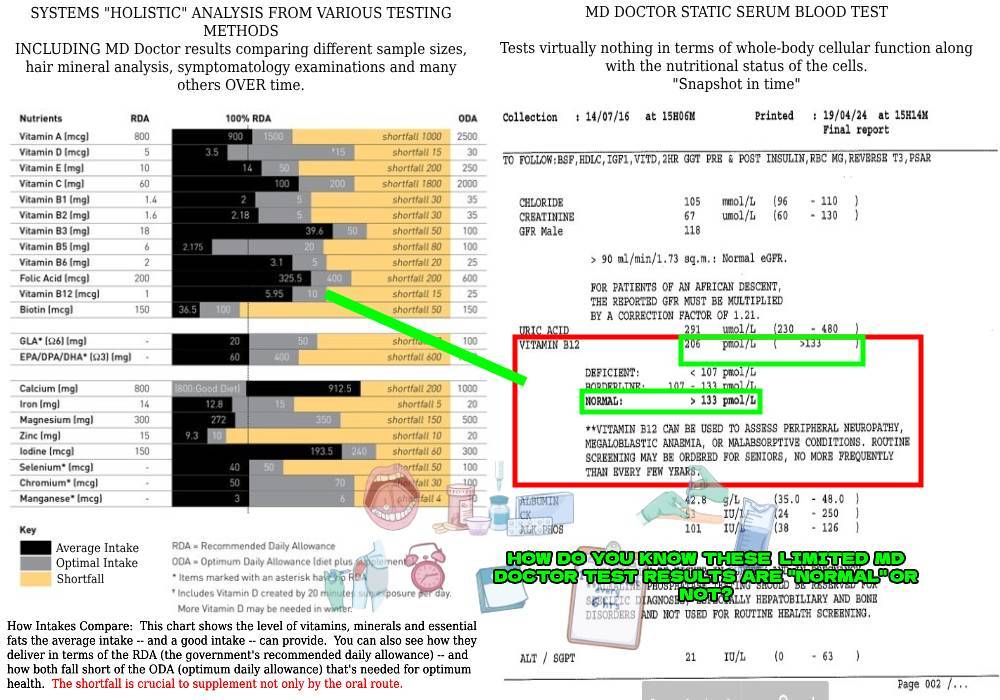
In the image above it shows only Vitamin B12 being tested and not B-Complex. In fact, B-complex and all the elements found on the left side of the image are never tested by "conventional" Medical doctors. Don't believe me? Go and ask your medical doctor about the above image.
What are your levels of the above and more?
The only way to find out is to obtain an individualized assessment of all the below functions and many more.

References:
Various NCBI (National Library of Medicine) articles included in the links