Many people who do not smoke seem to have a poor understanding of how diffficult it is to quit, and how one begins smoking in the first place. The biggest cause is lifestyle where peer pressure takes a large role in starting virtually any new habit whether socially acceptable or not.
Decades ago it was common and encouraged in most parts of the world to smoke cigarettes. Little was known at the time what harm inhaling combustible substances, but mostly the negatives were overlooked. Of course, there are some positive to smoking cigarettes, but the negatives outweigh them. We should know that inhaling any combustible substance is not a good long term health strategy, but many people have come to demonize anything remotely related to smoking combustible cigarettes over the decades mainly because of media. Yet, the establishment has not provided any worthwhile or effective systems solutions. Instead, we still see store shelves full of other reductionist strategies such as nicotine patches and many others, but they neglect to tell people that anything dealing with reality requires a systems approach.
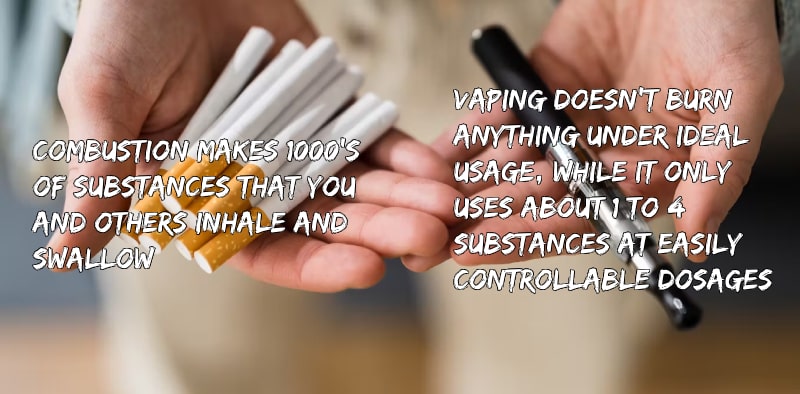
Vaping is not new, and the first vaping device came about back in the 1960s, but for many reasons it never came to be. One of the largest differences between the 1960s and now is that we did not have the anti-smoking campaigns back then as we do now. Vaping devices use 1 to 4 substances in the aerosolization process and because of this, is much less harmful if used under the ideal situations to health than smoking cigarettes because of the fact that no combustion takes place. It uses mostly naturally-occuring substances with little to no health impacts such as vegetable glycerine, propylene glycol, nicotine and flavoring. Some people actually also include caffeine liquid into the mixture and other substances. These facts alone show that the lack of combustion taking place is a significant factor in deleterious health effects.
Table Of Contents
Still, it does not explain biologically or psychologically why we crave anything. The fact is that we usually crave what we are allergic to, and the rush and fall of blood glucose that accompanies allergic reactions and this fact is prevalent in vaping as well. However we need to mention that vaping is entirely controllable in terms of how people use the devices and how the user can control the dosage of any substance in the "e-juice" mixture. Below is a testimonial from someone who began vaping after a very long time smoking cigarettes as a useful harm reduction strategy.
However, she does not mention why she craves anything in the first place, and what systems biology methods could be used to lessen the desire to smoke, vape, or even consume bad food and associate with toxic personalities that often creates biological negative feedback loops.
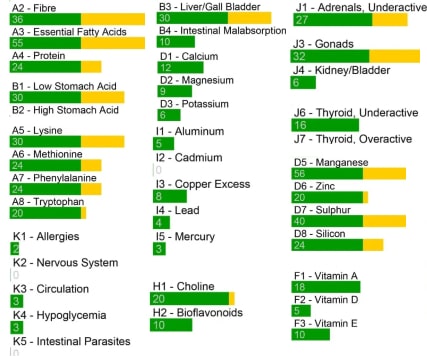
To accomplish the task of determing the above, one would need an individualized analysis of the body biochemistry, lifestyle, diet, supplement, and medication regime one may be under.
Vaping is actually recommended by many health agencies around the world such as the National Health Service in the United Kingdom.
Cigarette smoking & cellular nutritional implications
The detrimental effects of smoking on various diseases, such as cancer, emphysema, and cardiovascular illness, are widely known. However, the impact of smoking on the body's macro- and micronutrient levels is not discussed as frequently. It is important to recognize that imbalances in these nutrients may contribute to the development of many smoking-related health conditions.
Tobacco smoke contains numerous compounds that act as oxidants and prooxidants, generating free radicals and promoting lipid peroxidation in biological membranes. To counteract these harmful effects, the body relies on antioxidants like vitamin E, vitamin C, B-carotene, and selenium. Unfortunately, smoking has been shown to decrease the levels of vitamin C and B-carotene in the bloodstream.
Additionally, cadmium, a naturally occurring element in tobacco, reduces the availability of selenium and counteracts the effects of zinc, which is essential for the antioxidant enzyme superoxide dismutase. Furthermore, tobacco constituents have been found to lower the levels of several B-complex vitamins. The cellular nutritional status of smokers is further compromised by inadequate dietary choices, as they are less likely to consume fruits and vegetables rich in vitamin C and carotenes.
This is the confusing propaganda that misleads us all

There's no such thing as a "balanced diet" & nutrition isn't merely food. Why is that? It's because we're all individuals. Orthomolecular nutrition is the individualized analysis application of the substances within the food which our bodies often do not obtain enough of and are often blocked by antagonists.
"Nutrition" is far more than merely the trivial concept of food.
Botanists analyze the terrain to help plants prevent and restore cell function. Why not for humans?
What are YOUR individual cell nutritional imbalances?
While quitting smoking is the obvious solution to mitigate cigarette-related problems, it is the responsibility of the medical community to provide recommendations for reducing the risk of tobacco-related diseases in smokers.
Systems/Holistic Nutritionists can play a crucial role in this process. There is an ongoing debate regarding the optimal levels of nutrients for smokers and this is because we have to take an individualized approach to health and that requires a systems analysis. While additional vitamin C has already been recommended, the question remains whether other antioxidants should also be increased. Both sides of the argument are being considered, and it is important to find a balanced approach to address the nutritional needs of smokers. Source: National Library Of Medicine
Generalized Intakes & Supplementation That Likely Will Help Nicotine and Compulsive Addictions:
- Niacin or Niacinamide, also known as Vitamin B-3, can help reduce nicotine cravings by occupying the same receptors in the brain as nicotine. The recommended dosage is 500 mg to 1000 mg of Niacinamide with breakfast and lunch, or 50 mg of Niacin.
- B Complex Vitamins are also beneficial as they have a calming effect on the nervous system, decrease fatigue, stress, anxiety, and insomnia commonly associated with smoking cessation. A B-50 Complex is recommended, with 1 at breakfast and 1 at lunch.
- Chromium, in the form of 200-500mcg of GTF Chromium Polynicotinate, can help regulate blood sugar levels, which may drop after quitting smoking.
- L-Glutamine, an amino acid, can reduce cravings for cigarettes, alcohol, sugar, and carbs, and stabilize blood sugar levels. The recommended dosage is 2000 mg before breakfast, and before lunch and mid-afternoon as needed. However, it is not recommended for use in cancer patients, and caution is advised for long-term use without regular exercise.
- Vitamin C, up to 5000 mg a day, can be taken in the form of a 250-500 mg chewable or Vitamin C spray whenever a craving occurs.
- Magnesium, in the form of 200 to 400 mg, 2 times a day, can be taken with or without food, with one of the doses recommended before bed to aid with sleep.
- NAC (N-Acetyl-Cystine) at 1200 mg a day, should be taken with 2000 mg of Vitamin C a day to aid not only your lungs but also compulsive behaviors.
You may need to intake some or all of these in different methods such as small regular injections, daily trans-dermal patches along with the often limited oral route due to common absorption problems. The only sure-fire way you'll know what you need is with an individualized assessment rather than a "do it yourself" approach many have tried for various health concerns often with little results.
My name is Rachel, and I am 37 years old. I take pride in my indigenous heritage. Before retiring early, I worked as a registered nurse in oncology. Currently, I lead a socially isolated life, living alone with my dog. I rely on disability support pension and receive daily assistance from support workers through the NDIS. My primary health condition is rheumatoid arthritis, but I have also experienced multiple episodes of pulmonary embolisms, likely due to heavy smoking. Additionally, I have dealt with endometriosis, which required bowel surgery several years ago. At one point, I contracted shingles on my cornea, resulting in near-blindness overnight. Depression, anxiety, and pain disorder are ongoing battles in my life. I started nursing at the age of 16 or 17, and it quickly became apparent to me that smoking had disastrous effects on health. I faced pressure from my family as well, but like many young people, I initially believed I was invincible and that smoking wouldn't harm me. However, as I continued nursing, it became increasingly clear that smoking would catch up with me, and I needed to take action. I struggled with tobacco addiction for about 15 years, smoking around 30 to 40 cigarettes per day. It was a costly habit, with hundreds of dollars spent each week. I made multiple attempts to quit smoking.
I have experimented with various methods to quit smoking, including Champix, nicotine patches, lozenges, gum, sprays, hypnosis, acupuncture, and cold turkey. However, these mainstream quit smoking aids were not only expensive but also ineffective. For instance, nicotine patches caused severe skin irritation to the point where my skin came off with the patch. Additionally, Champix put me in the hospital and made me feel suicidal.
About 15 months ago, a family member suggested vaping as a potential solution. He had successfully quit smoking using vaping and understood the challenges I had faced with other methods. Intrigued by the idea, he took me to a local vape shop where I purchased my first vaping device. Since then, I have been vaping and have not touched a cigarette. I have no intention of going back to smoking and can still access liquid nicotine for my tobacco addiction treatment.
Although I am medically retired from registered nursing, I have extensively researched vaping and its effects. I am fully satisfied with the risks associated with vaping, as it is a much better alternative to the deadly combustible tobacco I used to smoke.
Ever since I began using vaping as a method to manage my rheumatoid arthritis, I have experienced remarkable improvements. Notably, I have not encountered any pulmonary emboli, which is a significant relief. Additionally, my overall well-being has seen a positive transformation. I now enjoy better sleep, improved breathing, and a significant reduction in my depression and anxiety levels. Being part of an incredible online community that offers unwavering support in our journey to quit tobacco has been invaluable to me.
However, the proposed new legislation is causing me great concern and apprehension. I must admit that I am feeling fearful, anxious, and quite frankly, afraid. My current circumstances are already challenging, and the requirement of obtaining a prescription to continue my vaping treatment will undoubtedly pose significant difficulties for me. Unfortunately, I can only envision two possible options in light of this legislation, both of which are far from ideal.
The first option would be to revert to smoking, which is something I desperately wish to avoid. The benefits I have experienced from quitting smoking and embracing vaping would be jeopardized, and that is a risk I am not willing to take lightly. The second option would involve resorting to the black market, which is something I strongly oppose. I do not wish to have a criminal record simply because I have chosen vaping as a means to quit smoking.
With every fiber of my being, I implore the government to reconsider and refrain from implementing this ill-conceived legislation that will ultimately prove ineffective. I speak not only for myself but also for my fellow Australian vaping community. We are a united family, and we beseech you to protect our access to vaping as a viable alternative to smoking.