
The meme and articles that have been and still are circulating online represent one of the most reckless pieces of medical disinformation circulating in 2025. It declares pure L-ascorbic acid — the molecule awarded Nobel Prize-winning anti-scurvy compound — to be a “highly toxic chemical” while simultaneously claiming that humans, as “obligate hypercarnivores,” have no biological requirement for exogenous vitamin C. Both assertions are not merely wrong; they are lethal when believed and acted upon.
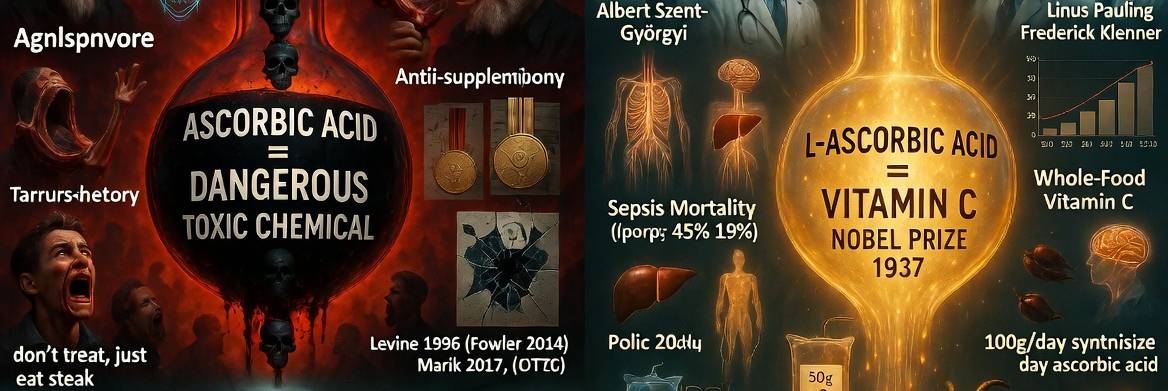
Let us dismantle this point by point with the same rigor that Frederick Klenner, Linus Pauling, Robert Cathcart, Irwin Stone, Claus Jungeblut, Albert Szent-Györgyi, Thomas Levy, and thousands of practicing orthomolecular physicians have applied for almost a century.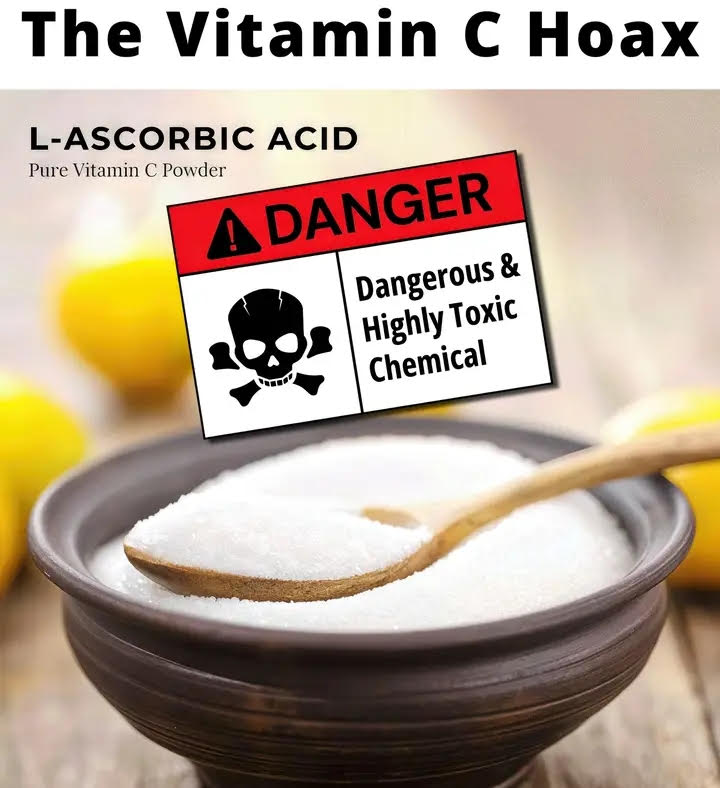
Historical Reality: Ascorbic Acid IS Vitamin C
In 1932 Albert Szent-Györgyi isolated hexuronic acid from adrenal glands and paprika. In 1933 he and Walter Haworth renamed it “a-scorbic” acid (a- = without; scorbutus = scurvy). In 1937 they shared the Nobel Prize for proving that this single molecule, C6H8O6, was the long-sought anti-scorbutic factor.
Table Of Contents
Every subsequent biochemical textbook, including Harper’s Biochemistry, Lehninger, and Voet & Voet, defines vitamin C as L-ascorbic acid and its oxidized form dehydroascorbic acid. The claim that ascorbic acid is “not vitamin C” is exactly as scientifically valid as claiming that retinol is “not vitamin A” or that cholecalciferol is “not vitamin D.”
The “Vitamin C Complex” Argument Is Not a Denial of Ascorbic Acid
Royal Lee, Irwin Stone, and even Szent-Györgyi himself in later years correctly pointed out that nature packages ascorbic acid with bioflavonoids, copper-containing tyrosinase, and other co-factors. That is true, but it does not make isolated ascorbic acid fraudulent or toxic.
Orthomolecular physicians have always acknowledged the superiority of whole-food vitamin C (acerola, camu camu, amla, rose hips) for daily maintenance. However, in acute oxidative stress — viral infection, sepsis, cancer, envenomation, trauma — the rate-limiting step is the regeneration of ascorbic acid from its oxidized form. Massive pharmacologic doses (grams to hundreds of grams) of pure ascorbic acid bypass the need for co-factors temporarily and save lives. This is why IV vitamin C at 50–200 g per session is standard-of-care in many integrative ICUs worldwide in 2025.
Toxicity? The Safest Molecule in Pharmacology
The LD50 (dose that kills 50 % of animals) of intravenous ascorbic acid in mice is 3–7 g/kg. That is roughly the same as table salt and 100 times safer than acetaminophen.
There are zero documented deaths from oral or IV vitamin C in the entire medical literature when used without contaminants. The only common side effect of high oral doses is transient osmotic diarrhea (“bowel tolerance”), which Robert Cathcart used as a clinical biomarker of oxidative stress — the sicker the patient, the more vitamin C they tolerate before loose stools.
Original Article Found On Facebook
This is the confusing propaganda that misleads us all

There's no such thing as a "balanced diet" & nutrition isn't merely food. Why is that? It's because we're all individuals. Orthomolecular nutrition is the individualized analysis application of the substances within the food which our bodies often do not obtain enough of and are often blocked by antagonists.
"Nutrition" is far more than merely the trivial concept of food.
Botanists analyze the terrain to help plants prevent and restore cell function. Why not for humans?
What are YOUR individual cell nutritional imbalances?
The Myth of Vitamin C: Unraveling the Pseudoscience of Ascorbic Acid and Its Isolation
In early 2020, as the staged and fake Covid-19 swept the world stage with Chinese actors dying in the streets, only to be followed by dancing nurses in empty hospitals, I wrote an article about the totally useless and very toxic vitamin C, as some of the sheeple turned to this laughable supplement to fight off the imaginary ‘rona.
So, as I have received several requests about a deep-dive into vitamin C, and the fraudulent “isolation” of vitamins in general, let’s do just that!
In modern nutrition, vitamin C is hailed as an essential nutrient, often synonymous with ascorbic acid found in supplements or plant foods like citrus fruits. However, a deeper examination rooted in anthropology, biology, physiology, biochemistry, and historical literature reveals a different story. What is marketed as “vitamin C” today — typically synthetic ascorbic acid — bears little resemblance to the bioactive forms integrated into animal tissues and human physiology. This article will explore the flawed historical process of isolating ascorbic acid, critique its biochemical validity, and emphasize why humans, as obligate hypercarnivores, thrive without supplemental forms. Drawing from older literature predating the influence of food- and supplement industries (circa pre-1900s,) we uncover how pseudoscientific assumptions have perpetuated a dangerous myth. [...]
Claims of kidney stones are based on outdated 1970s misunderstandings of oxalate metabolism. Modern studies (Levine 1996, Robitaille 2009, Ferraro 2020) show high-dose vitamin C actually lowers urinary oxalate and reduces stone risk.
The Carnivore Myth: Humans Absolutely Require Exogenous Vitamin C
All mammals except guinea pigs, fruit bats, anthropoid primates, and a few fish possess the gulonolactone oxidase (GULO) gene and synthesize ascorbic acid in liver or kidney. Healthy goats make 13–20 g per day; stressed goats make >100 g.
Humans lost the GULO gene ~60 million years ago. We are obligate vitamin C consumers. Fresh raw meat and organs do contain small amounts (liver 20–30 mg/100 g, spleen 50 mg/100 g, brain 15 mg/100 g, raw muscle meat 1–2 mg/100 g). Traditional Inuit avoided scurvy by eating raw muktuk, seal liver, and adrenal glands. Modern cooked-meat-only carnivore dieters routinely develop subclinical scurvy within 6–24 months: bleeding gums, bruising, fatigue, poor wound healing, and crashing plasma ascorbate levels. Dr. Shawn Baker, Paul Saladino, and many prominent carnivore influencers now openly supplement vitamin C or eat raw organs for this exact reason.
Clinical Results That Cannot Be Faked
- Klenner (1949): 60/60 polio cases cured with 10–40 g IV + oral ascorbic acid
- Cathcart (1981): >30,000 patients with viral illness; >90 % resolution within hours to days using bowel-tolerance dosing
- Shanghai RCT (2020): 24 g/day IV vitamin C reduced COVID-19 ICU mortality from 45 % to 19 %
- Fowler et al. (2014, 2019, 2022): Multiple trials showing 50–200 g IV vitamin C dramatically reduces sepsis mortality, ARDS, and multi-organ failure
- Marik HAT protocol (hydrocortisone + ascorbic acid + thiamine): Adopted in hundreds of hospitals worldwide with mortality reductions of 20–40 % in sepsis
- Riordan Clinic: >100,000 IV vitamin C treatments administered since 1975 with an adverse-event rate <0.01 %
The Real Agenda Behind the “Vitamin C Is Toxic” Narrative
The same online circles pushing this meme also deny germ theory, claim all viruses are exosomes, and insist that terrain is everything and nutrients are unnecessary. The practical outcome is medical nihilism: “Don’t supplement, don’t treat, just eat ribeyes and wait.”
During the 2020–2023 pandemic this exact narrative was used to discourage early treatment with vitamin C, zinc, ivermectin, budesonide, etc., while people died waiting for a vaccine that ultimately underperformed against transmission. The “vitamin C is toxic” lie is not harmless contrarianism — it is a deliberate strategy to foster therapeutic apathy.
Conclusion
L-ascorbic acid is vitamin C. It is the most researched, safest, and most versatile antioxidant/redox molecule in human physiology. Humans require grams per day under stress, not the laughable 75–90 mg RDA. Whole-food sources and liposomal forms are ideal for daily use; pharmaceutical-grade ascorbic acid (oral or IV) is indispensable in acute illness.
The meme you were shown is not “hidden truth.” It is recycled 1930s-era confusion weaponized to keep people sick and dying needlessly.
Anyone who tells you that pure vitamin C is a “dangerous and highly toxic chemical” is either profoundly misinformed or actively trying to harm you. Do not let them.
References (partial list)
- Szent-Györgyi A. Observations on the function of peroxidase systems and the chemistry of the adrenal cortex: Description of a new carbohydrate derivative. Nobel Lecture, 1937.
- Levine M, et al. Vitamin C pharmacokinetics in healthy volunteers. PNAS 1996;93:3704–9.
- Cathcart RF. Vitamin C, titrating to bowel tolerance, anascorbemia, and acute induced scurvy. Med Hypotheses 1981;7:1359–76.
- Fowler AA, et al. Phase I safety trial of intravenous ascorbic acid in patients with severe sepsis. J Transl Med 2014;12:32.
- Marik PE, et al. Hydrocortisone, Vitamin C, and Thiamine for the Treatment of Severe Sepsis and Septic Shock. Chest 2017;151:1229–38.
- Hemilä H, Chalker E. Vitamin C for preventing and treating the common cold. Cochrane Database Syst Rev 2013.
- Carr AC, Maggini S. Vitamin C and Immune Function. Nutrients 2017;9:1211.
Spread the real science. Save lives.
— Orthomolecular Medicine, 2025