

A few years back, I encountered someone who claimed to be an expert on a variety of subjects. One topic he discussed was "arachidonic acid." He asserted that his version of this acid came from spiders and insects, alluding to the common notion that we might have to eat more insects in the future. While he wasn't entirely off the mark regarding the growing use of insect-derived ingredients in our food supply, he was completely mistaken about the so-called spider-sounding acid he referred to. The truth is Omega 6 fatty acids are termed "arachidonic acid" and we've been consuming and increasingly large amount of this compared to the more beneficial Omega 3 fatty acids.
Arachidonic acid, despite its name stemming from the Latin word "arachis," which translates to peanut, is not found in significant quantities in peanuts. This polyunsaturated fatty acid was named in 1913, taking inspiration from its saturated counterpart, arachidic acid, which is abundantly present in peanuts and various other nuts.
In a landscape where dietary guidelines seem to shift frequently, the conversation around Omega-6 fatty acids remains particularly contentious. Recently, a surge of interest has emerged from a study suggesting that increased Omega-6 consumption may be linked to a reduced risk of cardiovascular issues, bringing these vital fats back into focus. However, as is often the case with nutritional discussions, the reality is more complex than simple assertions. This article delves into the core of the Omega-6 debate, examining the latest findings, tracing the historical changes in Omega-6 intake, and providing a well-rounded perspective on its significance in our diets. Determining whether Omega-6 fats are beneficial or detrimental to your health journey requires a deeper understanding of their effects, paving the way for a more knowledgeable and healthier approach to eating.
Table Of Contents
- Arachidonic Acid Isn't From Spiders: Omega 6 Vs Omega 3
- Lack Of Omega 6 Is Not The Only Problem: What About All The Intersecting Nutrients And Biochemical Influences?
- What is Omega 6 Fatty Acids?
- The ratio of Omega 6 to Omega 3: Way Out Of Whack Since The Early 1900s
- Brian Peskins Work On Essential Fatty Acids: We're Often Consuming Poor Quality Fats
- What are the consequences of excessive Omega-6 intake?
- So, what is the optimal Omega-3 to Omega-6 ratio?
- How To Improve This Consumption Ratio of Omega 3 to Omega 6 (arachidonic acid?)
- How Do You Know What Your Individual Needs Are For Essential Fatty Acids?
Linoleic acid (LA) (Omega-6 or "arachidonic acid) and α-linolenic acid (ALA) (n-3) are vital fatty acids that our bodies cannot produce on their own, making them essential for human health. Within the human body, these fatty acids are converted into arachidonic acid (ARA, n-6), eicosapentaenoic acid (EPA, n-3), and docosahexaenoic acid (DHA, n-3), all of which are crucial for maintaining bodily balance. Additionally, eicosanoids, which are bioactive lipids derived from these fatty acids, play significant roles in various homeostatic functions. Generally, ARA is associated with the production of pro-inflammatory eicosanoids, while EPA and DHA are linked to anti-inflammatory responses.
Therefore, a higher intake of n-3 polyunsaturated fatty acids (PUFAs) can help shield us from inflammatory diseases, cancer, cardiovascular issues, and other chronic conditions. This review highlights the primary sources, consumption patterns, and global intake of n-3 and n-6 PUFAs, along with their metabolic pathways for producing long-chain PUFAs and eicosanoids, and their implications for brain health, cardiovascular disease, obesity, cancer, and bone health.
Lack Of Omega 6 Is Not The Only Problem: What About All The Intersecting Nutrients And Biochemical Influences?
The significance of essential fatty acids is often overlooked, yet it is crucial for our well-being. Sadly, many individuals do not consume enough of these vital nutrients in their daily meals. Our modern diets are often loaded with modified fats, such as hydrogenated trans fats, which can harm our health. Even seemingly healthy options like salad dressings can pose a problem, as many contain canola oil, which is not the best choice for our bodies. If you're not preparing your own dressings or oil-based products, you might be inadvertently consuming these unhealthy fats, leading to a shortage of essential fatty acids. Our bodies depend on these nutrients, but they are frequently lacking in our diets.
Additionally, the depletion of minerals in our soil is a growing concern. Even if you eat a wide range of fruits and vegetables, they may not be cultivated in nutrient-dense soil, resulting in insufficient vitamins, B vitamins, and minerals. Unless you are consuming a significant amount of organic produce, you might find yourself deficient in essential minerals. Furthermore, many fruits and vegetables are harvested before they are fully ripe and only ripen during transport and storage, which can further diminish their nutritional value.
What is Omega 6 Fatty Acids?
Arachidonic acid (AA), also known as ARA, is a polyunsaturated omega-6 fatty acid with the chemical structure 20:4(ω−6) or 20:4(5,8,11,14). It is synthesized from linoleic acid, which can be obtained from intake sources, and can accumulate in animal fats. This fatty acid plays a crucial role as a precursor in the production of leukotrienes, prostaglandins, and thromboxanes.

Arachidonic acid is naturally integrated into the structural phospholipids of cell membranes throughout the body or stored within lipid bodies in immune cells. It is especially prevalent in the phospholipids of skeletal muscle, brain, liver, spleen, and retina. In resting cells, such as platelets, the local levels of esterified arachidonic acid can reach approximately 5 mM. When these cells are activated, about 10% of arachidonic acid diffuses at a concentration of 0.5 mM, which is then distributed between cellular uptake and binding to albumin protein. The amount of free arachidonic acid in circulation is quite low, primarily because albumin is highly abundant in human plasma, with concentrations reaching up to 35 mg/ml. This high level of albumin facilitates the binding of free fatty acids, keeping their concentration below 0.1 mmol.
Arachidonic acid can be obtained by humans and mammals from external sources, primarily through the direct intake of foods rich in AA. These include whole eggs, salmon, tuna, and various types of lean meats along with their visible fats. Alternatively, it can be derived from linoleic acid (LA; 18:2n-6), which is recognized as an essential fatty acid because humans and certain mammals do not possess the necessary enzymes to produce it. Linoleic acid is plentiful in vegetable oils like soybean, corn, sunflower, and safflower, and is also present in walnuts.
This is the confusing propaganda that misleads us all

There's no such thing as a "balanced diet" & nutrition isn't merely food. Why is that? It's because we're all individuals. Orthomolecular nutrition is the individualized analysis application of the substances within the food which our bodies often do not obtain enough of and are often blocked by antagonists.
"Nutrition" is far more than merely the trivial concept of food.
Botanists analyze the terrain to help plants prevent and restore cell function. Why not for humans?
What are YOUR individual cell nutritional imbalances?
The ratio of Omega 6 to Omega 3: Way Out Of Whack Since The Early 1900s
The balance between omega-3 and omega-6 fatty acids is a topic you may have encountered. In the United States, the average person consumes omega-6 fatty acids at least ten times more than omega-3s, indicating a potential deficiency in omega-3 intake. Research suggests that maintaining a ratio of omega-6 to omega-3 below 5 to 1 could be optimal, meaning that omega-6s should not exceed five times the amount of omega-3s. However, the key takeaway is that ensuring sufficient omega-3s in your diet is more crucial than focusing solely on the ratio.
Numerous studies indicate that humans originally thrived on a diet with an omega-6 to omega-3 essential fatty acids (EFA) ratio of about 1. In contrast, modern Western diets exhibit a staggering ratio of 15/1 to 16.7/1. This contemporary intake pattern is marked by a significant deficiency in omega-3 fatty acids and an overabundance of omega-6 fatty acids, diverging sharply from the nutritional framework that shaped human evolution and genetic development. The high levels of omega-6 polyunsaturated fatty acids (PUFA) and the elevated omega-6/omega-3 ratio prevalent in today's Western diets are linked to the onset of various diseases, including cardiovascular issues, cancer, and inflammatory and autoimmune disorders.
Conversely, increased omega-3 PUFA levels, which correspond to a lower omega-6/omega-3 ratio, have been shown to have protective effects. For instance, in secondary prevention of cardiovascular disease, a 4/1 ratio was associated with a remarkable 70% reduction in overall mortality. Additionally, a 2.5/1 ratio was found to decrease rectal cell proliferation in colorectal cancer patients, while a 4/1 ratio with the same omega-3 PUFA levels showed no impact. Women with breast cancer exhibited a lower omega-6/omega-3 ratio, correlating with a reduced risk. In rheumatoid arthritis patients, a ratio of 2-3/1 effectively suppressed inflammation, and a 5/1 ratio proved beneficial for asthma sufferers, whereas a 10/1 ratio had negative effects.
These findings suggest that the ideal ratio may differ depending on the specific disease, reflecting the complex, multigenic, and multifactorial nature of chronic illnesses. Consequently, the therapeutic dosage of omega-3 fatty acids may vary based on the severity of the disease influenced by genetic factors. A lower omega-6/omega-3 ratio is increasingly recognized as advantageous for mitigating the risk of many chronic diseases prevalent in both Western and developing nations, which are now spreading globally.
Brian Peskins Work On Essential Fatty Acids: We're Often Consuming Poor Quality Fats
Brian Peskin argues that our diets are overloaded with omega-3 fatty acids. Contrary to popular belief that we consume too much omega-6 and not enough omega-3, he suggests the opposite is true. Our bodies contain approximately 30 to 60 trillion cells, each surrounded by a lipid membrane composed of about 35% pure omega-6. The problem arises when we consume altered omega-6, which compromises these membranes and restricts oxygen flow to the cells. Each cell houses between 1,000 and 1,500 mitochondria, the powerhouses responsible for energy production, which also rely on unadulterated omega-6 for their membranes. Therefore, it's crucial to restore these lipid membranes. Excessive omega-3 intake, particularly from poor-quality fats, can lead to cellular suffocation. In his book, "The Parent Essential Oils," Peskin explains that the body produces only a tiny fraction of EPA and DHA from these essential oils.
Eating fish twice a week can provide us with sufficient omega-3 fatty acids, specifically EPA and DHA. Our bodies can also convert certain oils into these essential fats. The research in chemistry highlights the importance of lipid membranes in our bodies, which are crucial for cell oxygenation and energy production. Brian Peskin's book emphasizes how we can enhance our diet to include these beneficial fats. He discusses the role of evening primrose oil, rich in omega-6, in addressing Alzheimer's disease. On his website, you can find a research paper detailing studies that explore how restoring lipid membranes in the brain can impact Alzheimer's, showcasing some truly fascinating work.
What are the consequences of excessive Omega-6 intake?
For many individuals, consuming too much Omega-6 can significantly heighten the risk of various inflammatory diseases, such as diabetes, asthma, irritable bowel syndrome, heart disease, and obesity. Equally concerning is the connection between inflammation from high Omega-6 levels and an increase in mental health issues. An unbalanced diet can impact both your physical and mental well-being! The silver lining is that we can fairly easily correct this imbalance by making some straightforward intake changes and cutting back on Omega-6. One of the simplest methods to achieve this is by incorporating more fish and seafood into your meals. Additionally, replace vegetable oils like soybean, canola, safflower, and sunflower oils with healthier options such as coconut oil, butter, ghee, or olive oil. It’s also wise to limit grain intake, particularly wheat, and opt for naturally raised, free-range meat, fish, and eggs. These changes can lead to a significant reduction in inflammation throughout your body, lowering the risk of developing various related diseases.
So, what is the optimal Omega-3 to Omega-6 ratio?
A study from 2002 published in the Journal of Biomedicine & Pharmacotherapy aimed to highlight the significance of the balance between omega-6 and omega-3 essential fatty acids. The researchers examined different omega fatty acid ratios to determine which would best support optimal health and wellness. In every case, it was observed that decreasing Omega-6 intake resulted in health improvements. A ratio of 4:1 (Omega-6 to Omega-3) was linked to a 70% reduction in total mortality rates from cardiovascular disease, while a 2.5:1 ratio was associated with decreased cell proliferation in colorectal cancer patients. Additionally, women with breast cancer experienced lower risk factors after cutting back on Omega-6 fatty acids. Moreover, a 2.5:1 ratio also contributed to reduced inflammation in individuals with rheumatoid arthritis, and even those with asthma reported significant improvements in their symptoms.
“A lower ratio of omega-6: omega-3 fatty acids is more desirable in reducing the risk of many of the chronic diseases of high prevalence in Western societies, as well as in the developing countries, that are being exported to the rest of the world.” (source)
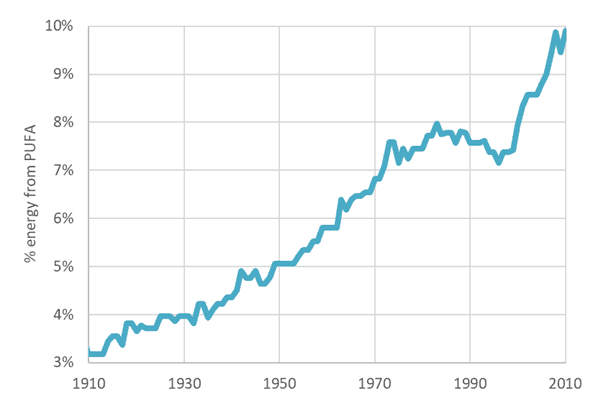
Although correlation does not imply causation, examining the shifts in our intake habits over the years can provide valuable insights, especially as our food system has become increasingly processed and obesity rates have surged. The following chart illustrates the rise in energy derived from polyunsaturated fatty acids (PUFAs) over the last hundred years. This data is sourced from the USDA Economic Research Service. It reveals a significant increase in PUFA consumption, climbing from 3.4% of total caloric intake in 1910 to 10% by 2010.
How To Improve This Consumption Ratio of Omega 3 to Omega 6 (arachidonic acid?)
To improve the balance of Omega-3 and Omega-6 fatty acids, it's advisable to add more oily fish like salmon, mackerel, and sardines to your meals. At the same time, try to cut back on refined vegetable oils and grains. Opting for naturally raised or grass-fed meat, fish, and animal products like eggs can also make a significant difference. One common critique of this guidance is that these wholesome, natural foods often come with a higher price tag compared to processed options, which is a valid point at first glance. Transitioning to real food means significantly reducing harmful additives found in many modern processed items, such as gluten, gliadin, and high fructose corn syrup.
These substances can either trigger the appetite centers in the brain or disrupt hormones that regulate hunger and blood sugar, including insulin, leptin, CCK, and ghrelin, leading to increased food intake. By making these healthier intake choices, you not only enhance your Omega-3 to Omega-6 ratio but also boost your energy levels and decrease your chances of illness. A nutritious diet can lessen your dependence on prescription medications and help control your hunger. If you feel you might not be getting enough Omega-3s from your diet, consider investing in a high-quality supplement.
How Do You Know What Your Individual Needs Are For Essential Fatty Acids?
A high omega-6 to omega-3 ratio can lead to increased inflammation in the body, which might elevate the risk of several diseases. Each of us is unique, and merely "guessing," as many tend to do, is far from sufficient to identify your specific needs for essential fatty acids, along with the various factors that interact with them in our daily lives.
These essential fats play a significant role in forming the phospholipid membranes of our cells, influencing hormones and the nervous system, which makes them key players in regulating emotions, mood, brain activity, and nerve signals. There are two primary types of essential fatty acids: Alpha-linolenic Acid (ALA or LNA), an Omega-3 fatty acid, and Linoleic Acid (LA), an Omega-6 fatty acid.
These serve as the foundational oils from which other fatty acids can be derived. Several factors can lead to a deficiency in EFAs, including inadequate dietary intake, poor absorption due to issues with vitamins B.1 and B.4, liver or gallbladder dysfunction excessive consumption of trans fats that can replace EFAs, and increased requirements during pregnancy and breastfeeding. Flaxseed oil is a great source of both Omega-3 and Omega-6 fatty acids in a 3:1 ratio, along with some Omega-9.
However, flaxseed is particularly vulnerable to UV light; thus, it’s best to store capsules in opaque gel caps and keep the liquid in dark brown glass bottles, refrigerated, and frozen after opening, as it can spoil within two weeks. Ground flaxseeds should also be kept in the freezer. If liver function is impaired, flaxseed may not be the most suitable EFA source for producing EPA and DHA. The required ratios of Omega-3 to Omega-6 can vary based on individual symptoms and needs.
Symptoms of low EFAs may include dry, rough skin, eczema, psoriasis, dermatitis, diaper rash, brittle hair with split ends, dry eye syndrome (difficulty producing tears), brittle nails, inflammatory conditions, hyperactivity in children, and various female health issues such as menopause, PMS, and cystic mastitis. Hemp oil is another option, providing Omega-3 and Omega-6 in a 3:1 ratio, with the necessary balance depending on specific symptoms and personal requirements.
A liver or gallbladder that isn't functioning properly can disrupt the absorption of vital fatty acids and hinder the metabolism of fat-soluble vitamins such as A, D, E, and K. When the gallbladder is surgically removed, bile flow into the duodenum becomes inconsistent, leading to issues with either excessive or insufficient bile in the body. Insufficient bile can result in constipation and various colon issues, and it may also be associated with candidiasis. Manganese plays a crucial role as a catalyst for enzyme activity and is essential for synthesizing fatty acids and cholesterol. Additionally, it is important for protein digestion, glucose regulation, and thyroid function.