
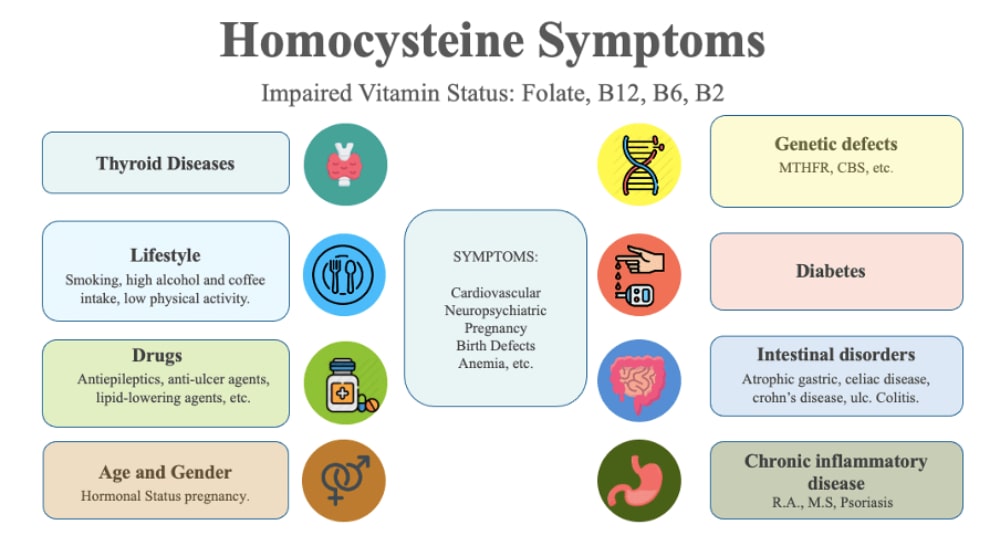
Many people are and have been worried for decades about top singular health issues such as cardiovascular issues, Diving into a crucial lab marker that often flies under the radar in routine blood tests: homocysteine. This marker is vital for identifying B vitamin deficiencies and can also highlight genetic issues. So, let’s get started! Homocysteine is often overlooked but plays a significant role in assessing B vitamin levels. It’s an amino acid that acts as a bridge between methionine and cysteine. Now, what exactly is methionine? It’s an essential amino acid rich in sulfur. Cysteine, on the other hand, is necessary for producing glutathione.
The process begins with methionine, which transforms into homocysteine before finally becoming cysteine. This conversion relies heavily on B vitamins, particularly folate, B6, and B12, which are essential for breaking down homocysteine into cysteine. Cysteine is crucial because it contributes to the production of glutathione, a powerful antioxidant involved in detoxification. Elevated homocysteine levels can significantly increase the risk of serious health issues, including heart attacks, strokes, blood clots, and damage to the endothelial cells lining blood vessels.
Damage to the arterial linings can lead to an increased risk of cardiovascular disease. Additionally, a deficiency in B vitamins can result in symptoms related to the nervous system, such as fatigue, numbness, and tingling. Inflammation tends to rise, while glutathione levels drop, affecting detoxification processes. Stress can exacerbate issues related to methylene tetrahydrofolate reductase (MTHFR), a genetic defect. Approximately 30 to 50 percent of the population carries this defect, with 10 to 20 percent having a more severe form. Homozygous individuals have two sets of the same genes, while heterozygous individuals have one set, specifically MTHFR.
Table Of Contents
It's quite common for many people to experience issues with B vitamins or homocysteine levels, while others seem unaffected. This discrepancy often stems from factors like dietary habits and overall quality of life. When we examine homocysteine, the specific lab marker we focus on is indeed called homocysteine, which typically ranges from zero to about 15. While I've never encountered anyone with a level of zero, I've certainly seen individuals with levels exceeding 15. Ideally, we aim for a level around seven on lab tests. High homocysteine can manifest through various symptoms, such as pale skin, which may indicate a B12 deficiency leading to anemia. Other symptoms include fatigue, muscle weakness, eyelid twitching, and even depression, along with numbness and tingling sensations.
"Mental illness" and homocysteine
Psychiatric disorders have a significant impact on public health worldwide. Altered homocysteine metabolism plays a role in the pathogenesis of many of these disorders by affecting methylation, promoting neuroexcitotoxicity, and inducing oxidative stress and inflammation. There is growing evidence linking these mechanisms to autism, schizophrenia, depression, bipolar disorder, and Alzheimer's disease. The origins of altered homocysteine metabolism are multifactorial, involving genetic predisposition and environmental factors that can be addressed through nutritional interventions. This article explores the relationship between 1-carbon metabolism and various psychiatric disorders, highlighting the importance of different cofactors and metabolites in this pathway. Studies suggest that elevated homocysteine levels may be linked to major psychiatric disorders like schizophrenia, bipolar disorder, and major depressive disorder.
The significance of mental health disorders in the context of global health cannot be overstated. A comprehensive meta-analysis encompassing 85 studies across 39 countries from 1983 to 2013 found that approximately 29.2% of adults experience common mental disorders at some point in their lives, while 10% to 20% of children and adolescents are affected by mental health issues worldwide. In recent decades, the relationship between homocysteine (Hcy) and its associated folate metabolic pathways has garnered significant interest, particularly concerning psychiatric conditions. High levels of Hcy are recognized as a notable risk factor for Alzheimer’s disease (AD), and disruptions in this metabolic pathway have also been linked to various mental health disorders, including autism, schizophrenia, depression, and bipolar disorder. Homocysteine is produced through the metabolic demethylation of dietary methionine.
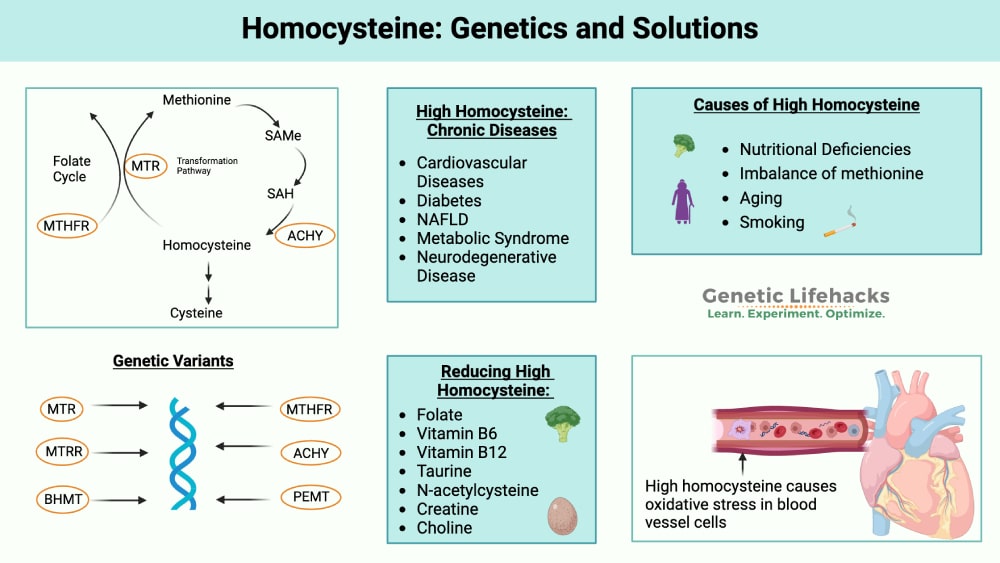
This process involves the synthesis of S-adenosylmethionine (SAM), which plays a crucial role in numerous methylation reactions, affecting DNA, RNA, phospholipids, and neurotransmitter production. Following these transmethylation reactions, SAM is transformed into S-adenosylhomocysteine (SAH), which is then hydrolyzed into adenosine and Hcy. Homocysteine can take one of two pathways: it can enter the transsulfuration pathway to produce cysteine, which is essential for glutathione (GSH) synthesis, or it can be remethylated back to methionine by methionine synthase (MS), an enzyme that depends on cobalamin. During this remethylation process, Hcy receives a methyl group from 5-methyltetrahydrofolate (5-MTHF), a product of the methylenetetrahydrofolate reductase (MTHFR) reaction. In certain species, the enzyme betaine–homocysteine methyltransferase utilizes betaine as a methyl donor to convert Hcy back into methionine in the liver and kidneys.
A classic case is that of an alcoholic, who may not consume enough food and thus deplete their B12, B6, and B9 levels, resulting in numbness, tingling, and balance issues due to the impact on the cerebellum. B vitamins are crucial for both central and peripheral nervous system functions, making numbness and tingling significant concerns. To improve your diet, consider incorporating more cruciferous vegetables, spinach, kale, and lentils. Now, let’s discuss supplementation. It's essential to include methyl donors to facilitate proper methylation. When considering supplements, we should focus on the right forms of nutrients, as folic acid is not beneficial. If your multivitamin contains folic acid instead of folate or another form of B9, it's best to discard it. Key supplements to consider include choline, trimethylglycine, SAMe, vitamin C, vitamin E, riboflavin, and B6 in its P5P form.
It's crucial to ensure you're getting the right forms of folate and other essential nutrients like B12, magnesium, and MSM. Genetic defects can complicate matters, especially when it comes to methylation issues. Checking your homocysteine levels and other markers like methylmalonic acid is key to identifying deficiencies. Remember, intake plays a significant role, but supplementation may be necessary, especially if your homocysteine levels are elevated.
This is the confusing propaganda that misleads us all

There's no such thing as a "balanced diet" & nutrition isn't merely food. Why is that? It's because we're all individuals. Orthomolecular nutrition is the individualized analysis application of the substances within the food which our bodies often do not obtain enough of and are often blocked by antagonists.
"Nutrition" is far more than merely the trivial concept of food.
Botanists analyze the terrain to help plants prevent and restore cell function. Why not for humans?
What are YOUR individual cell nutritional imbalances?
"Autism" and homocysteine
Autism spectrum disorders encompass a diverse range of neurodevelopmental conditions that typically appear before a child turns 3 years old. These disorders affect social and language skills, often accompanied by repetitive behaviors, restricted interests, and various gastrointestinal and immunologic issues. In the United States, the current incidence stands at 1 in 68 children, with a prevalence of 4 males to every 1 female. While autistic traits can be linked to various genetic and metabolic syndromes, the majority of cases are believed to have multiple contributing factors.
Some susceptibility genes have been identified, suggesting a complex origin for the disorder. Brain dysfunction in autism may be associated with subcellular hypomethylation and oxidative stress-induced damage, with altered homocysteine (Hcy) metabolism playing a role in these pathogenic mechanisms. Notably, a study by James et al in 2004 found that children with autism exhibited abnormal Hcy metabolism, showing decreased levels of methionine, SAM, Hcy, cysteine, and total GSH, along with elevated levels of SAH, adenosine, and oxidized GSH compared to control subjects.
Cellular nutrition plays a crucial role in the altered metabolism of Hcy in autism. Many children with autism exhibit food refusal and selective eating habits, leading to varying intake of proteins and vitamins. However, genetic variations in genes related to this metabolic pathway are also significant. It was discovered discovered a functional polymorphism (A80G) in the reduced folate carrier that can increase the risk of autism by 40% in offspring of heterozygous (AG) and homozygous (GG) mothers, regardless of the child's genotype. Polymorphisms in Methylenetetrahydrofolate C677T or A1298C, MS reductase A66G, and transcobalamin II C776G were also investigated for their association with autism risk. Vitamin supplementation is often recommended for managing autism spectrum disorders due to the altered metabolic profiles of these individuals.
Studies have shown that vitamin supplementation can help alleviate these metabolic abnormalities. In a preliminary study, James et al noted increased methionine levels and an improved SAM:SAH ratio after one month of methyl cobalamin supplementation. The same research group also observed enhanced antioxidant capacity in an open-label trial involving folinic acid and methyl cobalamin supplementation for three months. Additionally, urinary Hcy excretion decreased following a three-month regimen of pyridoxine and cobalamin supplementation, with further reduction when folic acid was added to the protocol for the same duration.
Various laboratory (usually a limited "snap shot in time" blood sample) tests are employed to identify vitamin B12 deficiency, with two of the most prevalent being highlighted here. The first is the serum B12 test. A blood serum level exceeding 300 picomoles per liter (pmol/L) or 400 picograms per milliliter signifies the likely base minimum vitamin B12. Conversely, levels falling below 300 pmol/L can lead to an increase in homocysteine levels in the blood, potentially harming health and elevated homocysteine may conversely promote the progression of liver damage.. It's important to note that the serum B12 test may not be accurate for individuals who consume spirulina or sea vegetables regularly, as these foods contain analogs that can interfere with the results. The second test is for methylmalonic acid.
Elevated levels of methylmalonic acid serve as a sensitive marker for mild vitamin B12 deficiency, while increased homocysteine levels indicate a deficiency in either vitamin B12 or folate. Our research explored the connections among serum concentrations of total homocysteine, methylmalonic acid, vitamin B12, and folate during pregnancy. They discovered a notable inverse relationship between homocysteine and red cell folate, as well as a weaker correlation with serum folate. Furthermore, aa significant inverse relationship between methylmalonic acid and vitamin B12 levels were identified in this study.
Monitoring homocysteine levels is crucial for predicting cardiovascular and especially "mental illness" accurately. It is recommended to have these levels checked by a healthcare professional. Vitamin B6, B12, folic acid, and choline play a key role in converting homocysteine to methionine. Any slight imbalance in this area requires careful consideration, especially if it coincides with deficiencies in choline, an enzyme that helps break down fats, and chromium, as a shortage of these can lead to intense cravings for refined and concentrated sugars.
When your skin is exposed to sunlight, it produces large amounts of cholesterol sulfate. If you lack this essential compound due to insufficient sun exposure, your body will find another way to increase its levels. Cholesterol sulfate is crucial for converting damaged LDL into plaque. Inside this plaque, your blood platelets extract the beneficial HDL cholesterol. By utilizing homocysteine as a sulfur source, the platelets then generate the cholesterol sulfate necessary for your heart and brain. Unfortunately, this plaque also raises your risk of cardiovascular disease. Dr. Seneff suggests that high serum cholesterol and low serum cholesterol sulfate are closely linked. To lower your LDL levels (the "bad" cholesterol associated with heart disease), it's important to get adequate sunlight exposure on your skin.
Common major contributors to high homocysteine levels
Wondering how to break free from this harmful cycle? According to Dr. Seneff, there is a connection between high serum cholesterol and low serum cholesterol sulfate. The key to lowering your LDL (the "bad" cholesterol linked to heart disease) is to ensure you get enough sunlight on your skin. She explains: “In this way, your skin will produce cholesterol sulfate, which will then flow freely through the blood—not packaged up inside LDL—and therefore your liver doesn’t have to make so much LDL. So the LDL goes down. In fact... there is a complete inverse relationship between sunlight and cardiovascular disease – the more sunlight, the less cardiovascular disease.”
Consuming high amounts of chlorogenic acid found in coffee and black tea can lead to increased plasma homocysteine levels. This suggests that chlorogenic acid in coffee could be partially responsible for the elevated homocysteine levels in coffee drinkers. A study revealed a significant rise in plasma homocysteine levels from 9.6 to 11.4 micromol/l (p < 0.001) in individuals who consumed natural, unfiltered coffee. On the other hand, those who drank modified coffee without irritants showed a trend towards decreased homocysteine levels (from 9.1 to 8.7 micromol/l).
This study indicates that reducing irritants in coffee can help mitigate its negative impact on homocysteine levels. Therefore, individuals with cardiovascular disease may benefit from reducing their intake of natural coffee or switching to a lower-irritant coffee option. A second-best option would be to eliminate it and other irritants entirely and replace with substances such as "naturally" flavoured water but the best option would be to assess your biochemistry and lifestyle to determine why you crave it every morning because it shouldn't be considered a normal function.
Consuming a diet high in animal protein was found to be linked to higher tHcy concentrations, while a diet rich in plant protein was associated with lower tHcy concentrations. Additionally, total protein intake showed a strong correlation with tCys concentrations.
The key to staying healthy is to focus on prevention through cellular nutrition and not the non-existent "balanced diet." This means consuming plenty of fiber and natural, healthy foods, while steering clear of polyunsaturated oils, rancid fats, chlorinated water, food preservatives, toxic chemicals, caffeine, alcohol, and refined sugars.
You need individualized assistance
Today's medical practices are rooted in Cartesian philosophy, which holds that the mind and body are distinct entities. While this approach is useful for research, it falls short in terms of preventing and treating health issues. Unfortunately, the modern medical system, including the healthcare industry, continues to focus on managing symptoms rather than addressing the body as a whole and treating individuals are mere statistics with limited preventive and even acute-based testing.
The problem is: many people follow generalized advice like this yet still don't see many results. Why is that? because they aren't receiving individualized help which you can find here. A lot of people overlook the fact that health-related information is often presented in a narrow, "one-size-fits-all" manner. A key concept that many fail to understand is that each person has their own distinct lifestyle, work-life balance, and particularly unique biochemical makeup due to these individual circumstances. What proves effective for one individual may not necessarily yield the same results for another, highlighting the importance of recognizing our differences.
References:
https://www.scielo.br/j/jiems/a/85W3FTYFpKwKKXnFjvGWg3f/?lang=en
https://pubmed.ncbi.nlm.nih.gov/11553056/