

Having dental amalgam tooth fillings means you're exposed to mercury, just like millions of other Americans. In the past, this silver-based filling was widely used to fix cavities, containing significant amounts of mercury. While most of the mercury stays in your mouth, some can enter your bloodstream. Why do we develop cavities & dental problems in the first place?
Research shows that people with these fillings have higher mercury levels in their blood compared to those without. Even so, many "conventional" publications report that the mercury levels are typically below the threshold for health concerns related to reproduction and other issues, often associated with consuming fish. However, this is not the case under typical usage because we tend to need to chew food and gassing of these metals typically also happens and breaks are common as well. These breaks release much larger amounts of traces of these metals especially when reacting with your saliva and acidic foods and drinks.
Why do we develop cavities and gum problems in the first place?
Dentists Drs. Curson and Losee have discovered that decayed teeth have elevated levels of copper and cadmium in their enamel, in comparison to healthy teeth. However, they have also found that extra zinc can counteract these high levels of copper and cadmium in all tissues of the body. In cases of zinc deficiency, the gums may become red and recede, leading to pyorrhea. But fear not, maintaining good dental hygiene and incorporating zinc and vitamin B complex into your routine can help restore the gums to their normal, healthy state once again (source). The problem is: how do you know what amounts of these you need and on what basis along with the other synergistic factors which are many?
Table Of Contents
Mercury released from dental amalgam is the main source of mercury in the central nervous system of adults and fetuses
Mercury released from dental amalgam is the main source of mercury in the central nervous system of adults and fetuses in developed countries. However, in smaller populations with a high intake of methyl mercury from fish, the impact of fish consumption can sometimes exceed that of amalgam fillings. One of the species of fish with the least to no mercury content is sardines but many people have preferences for salmon and tuna with the latter containing the most mercury. The greatest health concern is the potential interference with brain development in fetuses and children. Studies on monkeys, rats, and nerve cell cultures have shown that exposure to mercury vapor at very low concentrations can have detrimental effects. This is further supported by research on women who were exposed to mercury vapor during pregnancy (source).
It is highly advised to discontinue the use of amalgam for dental restorations and instead opt for alternative materials that are less toxic. Additionally, it is crucial to avoid amalgam restorations in children and women of childbearing age, as there is a potential risk of mercury interfering with brain development.
Remember, it's best to avoid getting new mercury fillings from your dentist, but removing existing ones may only be necessary, cost and health effective if tissue tests show persistently high levels of mercury and/or synergistic effects and cellular blocks related to the evidence of mercury in tissues.
Mercury originates mainly from the use of amalgam fillings in dental procedures. It can also be found in some vaccines, such as Thimerosal, which acts as a preservative. Furthermore, mercury is commonly used in the production of everyday items like fabric softeners, cosmetics (to prevent bacterial growth), tattoo dyes, wood preservatives, plastics, and many fungicides.
Dental amalgam, also known as amalgam alloy, is created by blending liquid mercury with a mixture of solid particles made from silver, tin, and copper. It's worth noting that certain alloys may contain trace amounts of zinc, mercury, and other metals. Did you know that dental amalgam is composed of approximately 50% elemental mercury by weight?
The FDA has stated that for the majority of individuals, being exposed to mercury vapor from dental amalgam fillings should not result in any adverse health effects. However, what kind of track record does the FDA have in the systems biology arena?
This is the confusing propaganda that misleads us all

There's no such thing as a "balanced diet" & nutrition isn't merely food. Why is that? It's because we're all individuals. Orthomolecular nutrition is the individualized analysis application of the substances within the food which our bodies often do not obtain enough of and are often blocked by antagonists.
"Nutrition" is far more than merely the trivial concept of food.
Botanists analyze the terrain to help plants prevent and restore cell function. Why not for humans?
What are YOUR individual cell nutritional imbalances?
Certain grains and seeds could potentially be exposed to harmful methyl mercury chlorine bleaches during processing, which may lead to contamination in our food chain. Methyl mercury, a substance produced as a byproduct of Candida Albicans, is created when saliva interacts with mercury fillings in the mouth.
Regrettably, it appears that contamination from manufacturing and industrial processes, as well as mishandling of water sources, has caused fish such as farmed salmon and tuna to become significant carriers of mercury. In reality, all kinds of fish, including ocean bacteria and algae, have the potential to contain different levels of mercury.
Mercury's impact on human cellular nutritional systems & organ function
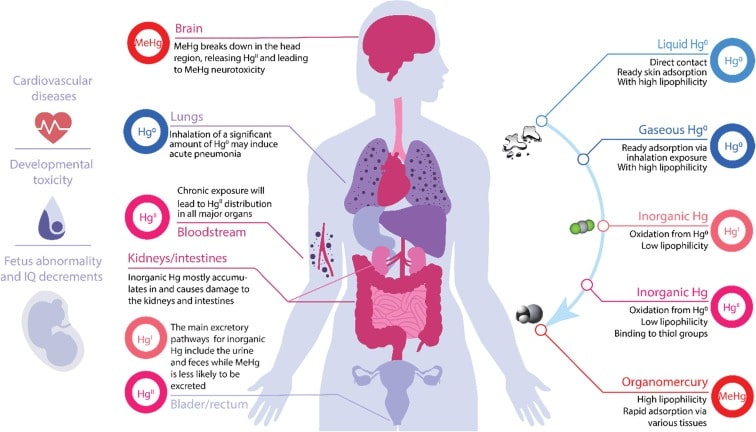
Mercury found in tissues can negatively impact the thyroid, leading to health issues like kidney and liver damage, as well as an imbalance in white blood cell count. In fact, the kidneys can store up to 50% of absorbed mercury, resulting in potential low WBC count. Symptoms of mercury exposure may include insomnia, dizziness, fatigue, weakness, depression, memory loss, dermatitis, hair loss, tremors, and poor coordination. Other effects can include inflamed gums, loss of ability to speak, loss of self-confidence, high blood pressure, diabetic tendencies, metallic taste in mouth, allergic tendencies, food cravings, facial and back pain (source).
Did you know that lodine and the heavy metal mercury have a fascinating relationship? It turns out that they have an inverse connection, where one can displace the other. This means that if you have a lot of amalgam fillings containing mercury, you might be at risk for iodine deficiency and hypothyroid problems. It's important to be aware of this potential health concern and take necessary precautions.
Animals, including humans, often experience mercury toxicity due to its strong attraction to sulfur (S) and thiols (-SH), which are crucial for forming disulfide (-S-S) bridges in protein chains. These bridges help maintain proteins in specific folded shapes necessary for their role as enzymes. Mercury can interfere with thiols, leading to enzyme inhibition.
References:
1. https://pubmed.ncbi.nlm.nih.gov/35623360/
2. https://www.ncbi.nlm.nih.gov/pmc/articles/PMC8026698/
3. https://journals.sagepub.com/doi/abs/10.1177/00220345700490030901