
Many naturally occuring substances in the human and animal as well as plant bodies, such as vitamins, minerals, essential fatty acids, amino acids, flavonoids, herbs, and accessory food factors, are what allows these organisms to actually live. The problem is these micro and macro nutrients are severely lacking in our diet, food in workplaces and social settings, and in our backward modern society we encounter far more stress, toxicity from industrial sources, than our ancestors. They also address common health issues at opimal levels that cause discomfort and disability. To fully reap their benefits, it is crucial to consume adequate, frequent doses. While they are known to prevent deficiency diseases at low doses, their potential for therapeutic purposes and safeguarding against age-related degeneration is often overlooked by many physicians.
Medical establishment deficiency (according their poor standards) diseases such as scurvy, beri beri, pellagra, and rickets can be effectively treated with small amounts of essential nutrients. However, these diseases are now uncommon in developed countries. Instead, the main concern is often marginal nutrition, which is associated with marginal health. To maximize the benefits of these naturally occuring substances, it is crucial to disregard the recommended dietary allowances (RDA) levels found in food and common supplements. Instead, focus on research that demonstrates the advantages of appropriate doses, which are frequently higher than the RDA.
We Are Not Deficient In Drugs & Surgeries
Nor are we deficient in street drugs, cigarettes, alcohol, beer, junk food, toxic people, but our bodies tend to crave what we are IgE allergic to. This does not mean an overly obvious allergic reaction like hives, sneezing and other obvious symptoms that MDs treat. It's often subtle allergies on the molecular level that you don't see that cause things such as blood sugar swings and others that contribute to mood and perceptual cognitive changes as well as subtle physical problems.
Table Of Contents
- "Nutrition" Is Far More Than Food
- We Are Not Deficient In Drugs & Surgeries
- Workplace "sick care" benefit plans sway us from the truth
- You Are Not Doomed Based On "Genetics"
- An Official Doctor's Limited Only Blood Test
- Nutrient Content Of Foods Severely Degraded Since 1950s
- This Is Not Neurotic or "Orthorexic" Nonsense
- How do you know what your body needs and what it doesn't need?
Contrary to what most people think, we do not lack brand name drugs from the well-meaning medical doctor, nurses and other practitioners. However, the most effective orientation these people receive is based on acute injuries but not chronic issues such as cancer, diabetes, various disorders they are told there is no "cure" for except endless prescriptions and the increased risk of other conditions that not maintaining optimal health brings along with the endless maze of prescriptions. They are also told that many conditions are "genetic" but the more appropriate term should be "epi-genetic." Epigenetics is the study of how external factors impact the epigenome of cells and, consequently, human well-being.
Workplace "sick care" benefit plans sway us from the truth
A big problem is many people are subscribed to their workplace misnomer of "health insurance" that provides employer-paid sick-care benefits which includes drugs, surgeries and other reductionist treatments. Because of this many people are weary to stray from concepts and treatments that are 100% effective but are unwilling to pay for them out of pocket because of the misinformation they read online. Make no mistake: there is a lot of false information out there trying to sway you from the truth.
You Are Not Doomed Based On "Genetics"
Epigenetic changes influence the structure of chromatin, which in turn regulates gene expression. Various environmental factors, such as behavior, diet, and exposure to chemicals and pollutants, can have epigenetic effects. During fetal development and at the cellular level, epigenetic mechanisms play a crucial role, as environmental exposures can potentially harm the fetus by altering the epigenome and increasing the risk of diseases later in life. On the other hand, certain bioactive components in food can induce protective epigenetic modifications throughout an individual's lifespan, with nutrition during early stages of life being particularly significant. In addition to genetics, an individual's overall health is influenced by a multitude of environmental signals that begin during gestation and continue to shape the epigenome.
It turns out all the topics mentioned above were proven to exist contrary to what the current medical establishment and pundits claim. As far back as the 1950s is when Dr. Linus Pauling, Dr. Abram Hoffer, and many other scientists and Doctors came up with the framework of human metabolism much like a plant or prize-horse veterinarian would treat their subjects for optimal health. Orthomolecular medicine aims to restore and maintain health by providing the body with sufficient amounts of substances that are naturally present in it.
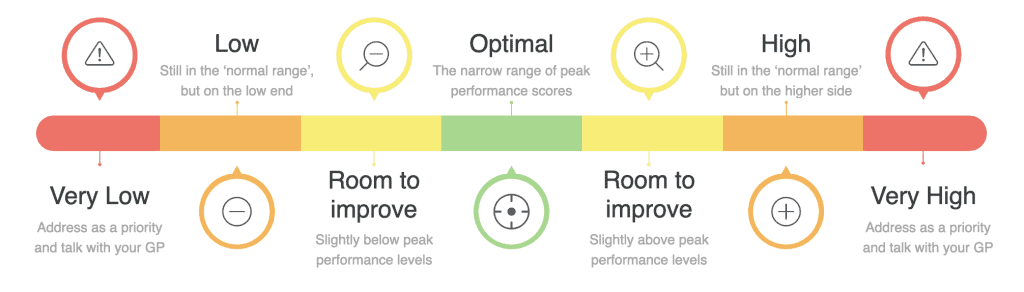
An Official Doctor's Limited Only Blood Test
As you can see in the following "snap shot in time" blood test they test virtually no cellular nutritional substances before dispensing life and society destroying labels based on literally nothing. On top of this they prescribe medications that settle the person down for a very short while, but keep the medications going until the body builds a resistance, and then switch medications often to newer, more bio-chemically deleterious than the original often older ones.
This is the confusing propaganda that misleads us all

There's no such thing as a "balanced diet" & nutrition isn't merely food. Why is that? It's because we're all individuals. Orthomolecular nutrition is the individualized analysis application of the substances within the food which our bodies often do not obtain enough of and are often blocked by antagonists.
"Nutrition" is far more than merely the trivial concept of food.
Botanists analyze the terrain to help plants prevent and restore cell function. Why not for humans?
What are YOUR individual cell nutritional imbalances?

The definition and term of "ortho-molecular medicine" was established by Linus Pauling, a renowned molecular chemist and Nobel Prize winner, in 1968. The aging process can be accelerated by various factors such as exposure to free radicals, chronic inflammation, and toxic substances like heavy metals or industrial and agricultural hydrocarbons. Orthomolecular therapy seeks to slow down or reverse this process while also addressing health issues.
There has been a growing body of scientific research that supports the idea that large amounts of nutrients can have therapeutic and preventative effects. Vitamins C and E, beta-carotene, B-complex vitamins, and coenzyme Q10 are just a few examples of nutrients that have been found to have positive impacts on health and lifespan when taken in doses higher than the recommended daily allowance. Although minerals like magnesium, zinc, and chromium have therapeutic levels closer to the RDA, taking supplements beyond what is found in food may still be necessary for disease prevention, treatment, and anti-aging purposes.
Nutrient Content Of Foods Severely Degraded Since 1950s
Were you aware that since approximately 1950, the quality of our food supply in North America has significantly declined? Take, for instance, the nutrient levels found in an orange back in 1980, which were approximately eight times higher than what we find in the produce and vegetables available today. This raises an important question: considering that all animals rely on protein derived from plants, what does this mean for the nutrient content of the plant-based food we consume on a daily basis?
According to research conducted by Cinzia Cuneo and Georgetown University, numerous scientists have dedicated their efforts over the past two decades to comparing nutrient data collected in the 1950s and 1960s with more recent nutrient analyses. The widespread practice of intensive agriculture, known as "mono-culture," has significantly depleted the soil, while fruits and vegetables undergo various treatments to enhance their resistance.
Additionally, a wide array of fertilizers are utilized to promote their growth. Unfortunately, the selection of standardized seeds has had a detrimental effect on both variety and nutritional value. As a consequence, the apples, carrots, and peaches that we find in our local supermarkets are often harvested prematurely to meet the ever-growing demand for higher yields, resulting in produce that lacks essential nutrients.

The nutritional composition of fruits and vegetables has undergone significant changes over the years, influenced by various factors. Back in the 1950s, an orange was a powerhouse of vitamin A, crucial for our vision and immune system. However, today, the scenario has changed drastically. To obtain the same amount of vitamin A, we would have to devour a whopping 21 oranges!
Surprisingly, onions and potatoes no longer contain even a trace of this essential nutrient, and the iron content in meat has been reduced by half. Even the calcium in broccoli has been divided by four. With such alterations, it's no wonder that we often find ourselves in need of supplements. But here's the catch - how do we determine the right amount of supplementation required on a daily basis? Moreover, if we solely rely on oral consumption, how can we be certain that our bodies are effectively absorbing the nutrients we need?
It would take devouring a whopping 100 apples in a single day to match the vitamin C levels found in an apple from yesteryears. Nevertheless, it's important to acknowledge that numerous elements influence the nutritional worth of fruits and veggies, and surprisingly, some of these factors are enhancing their nutritional goodness. Upon delving deeper, it becomes apparent that alterations in how samples are taken, measurement techniques, and even geographical differences can all have an impact on the nutrient values. Moreover, the unpredictable variation in nutrient values from one piece of produce to another is far more substantial than what meets the eye.
It is an established fact that the nutritional value of the agricultural products we currently possess is not as high as that of previous generations, including our parents and grandparents. Throughout the past century, the levels of protein, calcium, phosphorus, iron, riboflavin (vitamin B2), and vitamin C in fruits and vegetables have gradually decreased. It is important to note that this discovery was not made by the U.S. Department of Agriculture (USDA), but rather by a research team led by Donald Davis from the University of Texas (UT) at Austin.
This groundbreaking study utilized the USDA's nutritional data from both the 1950s and 1999, focusing on 43 different types of vegetables and fruits. The decline in nutritional content varies among these produce, ranging from a 6 percent decrease in protein to a significant 38 percent decrease in riboflavin. Therefore, the term "half" is simply an approximation. There are two primary factors contributing to this decline in nutrition. Firstly, soil depletion is the main cause of this situation. Secondly, the development of new plant varieties aimed at increasing yield also plays a role. Evidence suggests that when plants are cultivated to produce larger yields in a shorter period, they often fail to generate or absorb the same amount of nutrients at the same rate.
This Is Not Neurotic or "Orthorexic" Nonsense
Every year, over 13 million lives are lost due to environmental pollutants, and it is estimated that up to 24% of diseases can be prevented by avoiding environmental exposures. A screening conducted by the United States Center for Disease Control and Prevention revealed the presence of 148 distinct environmental chemicals in the blood and urine of the US population, highlighting the widespread exposure to such substances. Recent research indicates that environmental pollutants may contribute to the development of diseases through changes in gene expression regulated by epigenetic mechanisms.
How do you know what your body needs and what it doesn't need?
You are probably imaging that you need an insane amount of blood work, CAT scans, really invasive examinations. The truth is none of that is true unless mainly for acute injuries and sudden detection of illness or injury that was likely building up for many years or decades. These tests and exam records do help if you have the records in the analysis with me.
References: