There exist notable differences in the cellular nutritional choices (much different than "diet") made by men and women. Men's dietary patterns are often criticized as being "unhealthy" in comparison to women's. The disparities in nutrition between genders are primarily shaped by societal gender roles and expectations rather than biological factors.
Certain foods such as meat and alcohol are associated with masculinity and power, while fruits and vegetables are considered feminine and weak. However, this fails to acknowledge that a typical female diet often revolves around attractiveness and may involve restrictive eating.
Women's perceived healthier eating habits are also accompanied by a greater understanding and proficiency in nutrition. Nevertheless, it is crucial to question whether male family members or household members are exempt from taking responsibility for their own health, or if they rely on women due to the perceived feminine responsibility for all aspects of nutrition and care.
Table Of Contents
The extensive knowledge and competence of women in healthy eating and food preparation can sometimes hinder men from actively participating in nutritional matters. Instead of highlighting gender disparities, it is more effective to concentrate on an individual's eating habits and adopt a gender-neutral approach to communication and counseling regarding nutrition.
There are large disparities in dietary patterns between sexes and genders. Research shows that females and women/girls tend to consume more health-promoting foods such as fruits, vegetables, and meat alternatives, while males and men/boys generally have a lower overall diet quality. These differences in diet quality have been associated with a higher risk of chronic disease development in adult males compared to females.
However, females and women/girls are more likely to face food restriction and have problematic emotional relationships with food, leading to unequal health risks. It is important to note that the current focus in the literature primarily revolves around the impact of sex on diet and health outcomes, neglecting the significant influence of gender-specific social pressures.
Motivation plays a significant role in shaping the dietary habits of boys and girls. A study conducted in the United States revealed that girls tend to be more motivated to maintain a healthy diet, focusing on consuming fruits and vegetables while avoiding unhealthy junk food and sugary drinks, in comparison to boys. Further research suggests that girls' motivation may stem from their desire to achieve a specific body shape or to fit in by appearing healthy, whereas boys' motivation may be more intrinsic, driven by personal enjoyment or a belief in the importance of healthy eating. Girls' motivators as more extrinsic, driven by a desire to please others.
On the other hand, boys' dietary habits may be better explained by intrinsic motivators, such as personal preference. A review of dietary behaviors among adults found that women tend to rely more on extrinsic motivators, such as peers or emotions, while men rely more on intrinsic motivators like personal preference. Although these differences have yet to be confirmed in adolescents, comprehending the various types of motivation is crucial as they can have diverse impacts on dietary behaviors.
Both men and women require proper cellular nutrition, but there are specific nutrients that each gender needs in varying amounts. Additionally, women's nutritional needs change during their reproductive stages, which makes it difficult for researchers to study them extensively. Men's hormonal stability has led to more studies on their nutritional needs, leaving a gap in knowledge about women's needs. Therefore, there is an urgent need for more research on gender-specific nutritional health.
Gender & Basic Cellular Nutritional Needs
Macronutrients and micronutrients are vital elements present in a variety of foods. Protein, fat, and carbohydrates, which are the three primary macronutrients, are essential for maintaining optimal health. Consuming these macronutrients in the right proportions is crucial for overall well-being. Interestingly, these ratios remain consistent irrespective of gender. Both adult men and women should aim to achieve a well-balanced intake of macronutrients.
This is the confusing propaganda that misleads us all

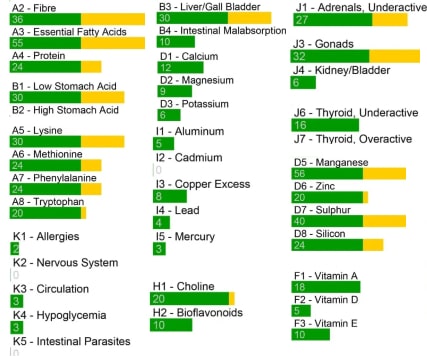
There's no such thing as a "balanced diet" & nutrition isn't merely food. Why is that? It's because we're all individuals. Orthomolecular nutrition is the individualized analysis application of the substances within the food which our bodies often do not obtain enough of and are often blocked by antagonists.
"Nutrition" is far more than merely the trivial concept of food.
Botanists analyze the terrain to help plants prevent and restore cell function. Why not for humans?
What are YOUR individual cell nutritional imbalances?
1. The recommended daily intake for macronutrients varies depending on the individual's needs. Protein should make up 10 to 35% of their calorie intake, while carbohydrates should account for 45 to 65%, and fats should make up 20 to 35%.
2. It's important to note that nutritional requirements are not one-size-fits-all, even among individuals of the same gender. Factors such as genetic composition, body structure, hormonal balance, chronic ailments, and medications can greatly impact an individual's dietary needs for both macronutrients and micronutrients.
Gender and Micronutrients: Differences in Nutritional Needs
Micronutrients, which refer to essential vitamins and minerals required in small quantities for optimal health, play a crucial role in maintaining overall well-being. The Food and Drug Administration (FDA) has established daily nutritional goals for these micronutrients. However, it is important to note that the nutritional needs for men and women differ due to variations in caloric intake required to meet their basic needs. This is especially true when we realize that the RDA is basically the "minimum wage" of cellular nutrition, while the Optimal Daily Intake or ODI is the much preferable individual standard to maintain optimal health.
Men, who generally require a higher calorie intake compared to women, have elevated requirements for certain micronutrients. These include magnesium, potassium, zinc, vitamin A, vitamin C, thiamin, riboflavin, niacin, choline, vitamin K, and vitamin B-6 (for individuals above the age of 70).
On the other hand, there are certain micronutrients for which the daily nutritional goals remain the same for both males and females. These include phosphorus, sodium, vitamin E, vitamin D, vitamin B-12, and folate.
Understanding these gender-specific differences in micronutrient needs is crucial for ensuring that individuals receive the appropriate nutrients to support their overall health and well-being.
Gender And Cellular Toxicity
Lots of people also seem to forget that we're all exposed to toxins often that are too small to see, hear, touch or see. That's because it's often in very small, hidden amounts in the world around us, but especially at work and in our food. Industrialization is responsible for many of the cellular toxicity issues around us but it's not a subject that comes up until we develop some kind of work-related illness.
Cellular heavy metal toxicity is commonly recognized in the cellular nutrition world because of the metabolic interference even small molecular amounts that present in sub-clinical symptoms in the early stages. If they are not removed from the body the statistical chance of them presenting in mild to severe symptoms and label diseases eventually show up.